
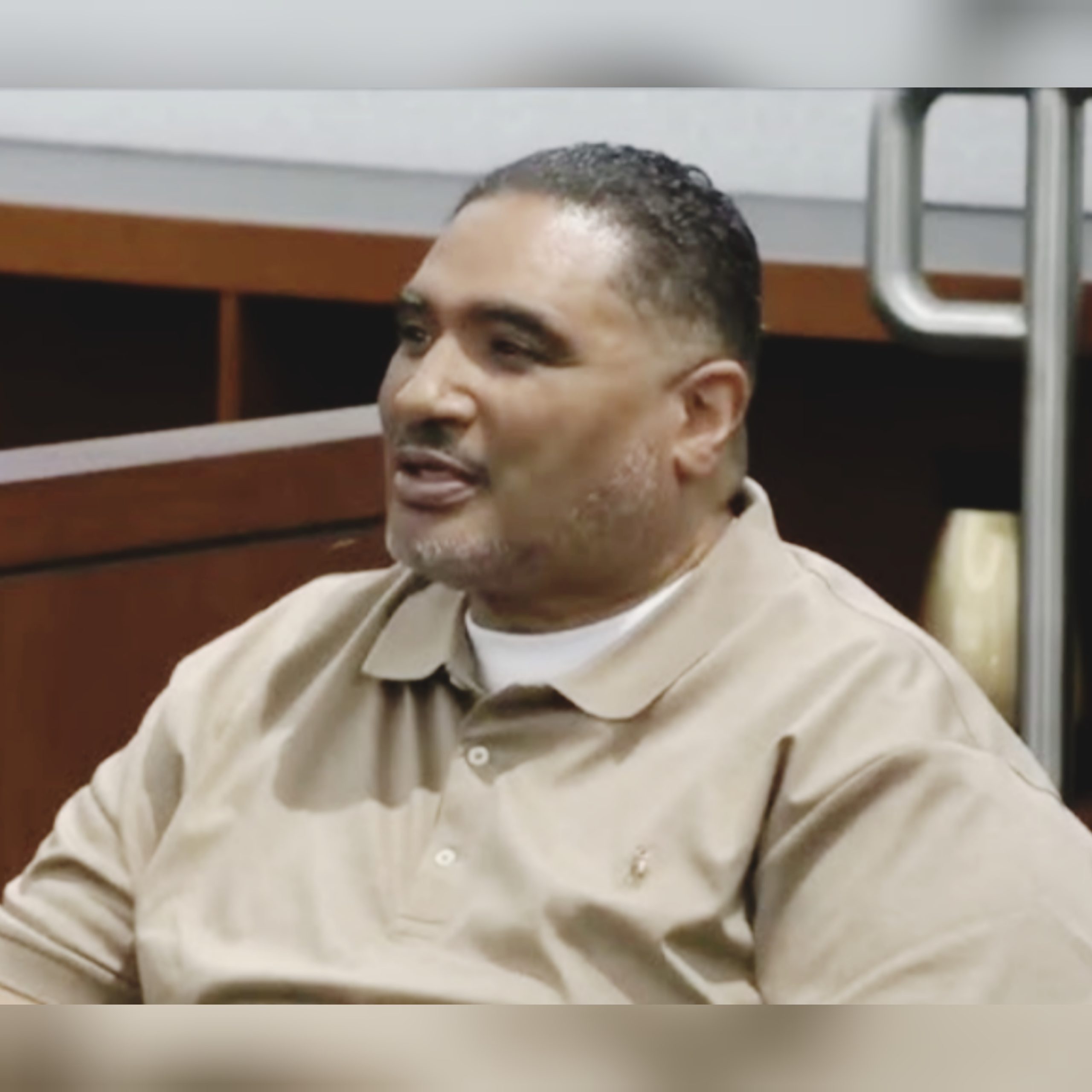
Reggie Wright Jr. Biography
Reginald Wright Jr., widely known as Reggie Wright Jr., is an American figure whose path has taken him from the streets and police stations of Compton, California, into the high-stakes world of private security for one of hip-hop’s most influential record labels. Born and raised in Compton, he built a career first in law enforcement with the Compton Police Department and later as the head of security for Death Row Records through his company Wright Way Protective Services. His close ties to Marion “Suge” Knight, his presence during the peak years of West Coast gangsta rap, and his later legal challenges have kept his name in public discussion for decades.
Wright’s story reflects the complex realities of life in a city that became synonymous with both opportunity and hardship for many African American families in Southern California. From his early years navigating Compton’s changing neighborhoods to his roles protecting major artists and managing aspects of a major label, his experiences offer a firsthand perspective on law enforcement, the music industry, and the challenges that followed. This biography draws on publicly documented interviews, court-related statements, and established accounts to present a clear and factual overview of his life and work.
Reggie Wright Jr. Early Life
Reggie Wright Jr. was born and raised in Compton, California. Reliable public sources have not confirmed an exact date of birth, so any specific year or age claims circulating online should be treated with caution. What is firmly established is that he spent his childhood and formative years in the city, a place that underwent significant demographic and social shifts during the decades when he was growing up.
Compton sits in Los Angeles County in the state of California. Incorporated in 1888, the city developed as a working-class community that initially attracted diverse residents. By the mid-twentieth century it had become a destination for African American families seeking homeownership and better living conditions away from the more crowded areas of South Central Los Angeles and Watts. Restrictive covenants that once limited housing options began to fall after court rulings in the late 1940s, and the Black population rose steadily. By 1970, Compton was majority African American. The city elected its first Black mayor in 1969 and developed a reputation as a place where middle-class Black families could own homes with yards and participate in local governance.
At the same time, economic pressures, the departure of manufacturing jobs, and the arrival of crack cocaine in the 1980s brought serious challenges. Gang activity increased, and the city gained national attention through music that depicted the realities of street life. Wright has described moving with his family from the Imperial Courts housing projects in Watts to Compton when he was in the early elementary grades, around the early 1970s. His parents purchased a home in an area that was still mixed at the time but was rapidly changing as white residents moved out.
His father, Reginald Wright Sr., worked for the Compton Police Department and rose through the ranks, serving for many years as a gang-enforcement lieutenant and later reaching higher positions. This family connection to local law enforcement shaped Wright Jr.’s early environment. He has spoken of attending Stephen C. Foster Elementary School in Compton, the same school attended by Suge Knight, whom he first met in the early grades. The two continued through junior high and high school together. Wright graduated from high school in 1984. He has recalled that the crack epidemic hit hard during his teenage and young adult years, affecting many households in the community and increasing violence on the streets.
After high school, Wright enrolled at California State University, Long Beach. He has said he initially hoped to pursue football but that plans shifted with coaching changes. While still young, he began working as a civilian jailer for the City of Compton in 1985 at the age of 19, a role he held while continuing his studies. He completed his time at Cal State Long Beach and entered the police academy around 1990, transitioning into full police officer duties with the Compton Police Department.
These early years in Compton, a California city of roughly ten square miles that sits near major freeways and ports, gave Wright a dual perspective. He grew up in the neighborhoods, knew many of the people who later became involved in street groups, and then worked inside the local justice system. Compton’s history of demographic change, economic struggle, and cultural influence forms the backdrop against which his later career choices make sense. The city’s evolution from a hopeful Black suburban enclave to a place marked by high crime rates in the 1980s and early 1990s is well documented in historical accounts and census data.
Reggie Wright Jr. State of Origin and Compton Roots
California is Wright’s state of origin, and Compton is the specific community that defined his upbringing. Located in the southern part of Los Angeles County, Compton is bordered by cities such as Long Beach, Carson, and Lynwood. Its central position earned it the nickname “Hub City.” The area features a mix of residential streets, industrial zones, and commercial corridors. Climate is typical of the coastal Southern California basin, with mild temperatures moderated by proximity to the Pacific Ocean.
Historically, Compton’s population grew rapidly after World War II. African American migration from the South and from nearby Los Angeles neighborhoods accelerated in the 1950s and 1960s. By the 1970s the city was predominantly Black, with a strong sense of local political control. The introduction of crack cocaine in the mid-1980s, combined with the loss of blue-collar jobs, contributed to rising unemployment and gang conflicts between groups such as the Crips and Bloods. The Bloods had roots on Piru Street in Compton. Music groups based in or associated with the city brought these realities to a national audience.
Wright’s family was part of the wave of residents who sought stability in Compton after earlier years in Watts. His father’s long career in the Compton Police Department placed the family in a unique position within the community. Officers and residents often knew one another personally, and Wright has described his father as a respected figure. This environment of familiarity between law enforcement and neighborhood networks later influenced how Wright approached private security work.
Understanding Compton’s place in California history helps explain the path Wright took. California’s large urban counties have long dealt with the interplay of migration, economic shifts, and cultural expression. Compton became a symbol both of Black aspiration and of the costs of the drug trade and street violence. Wright lived through these changes as a child, a young adult working in the jail, and an officer on the streets.
Reggie Wright Jr. Career
Wright’s professional life moved from public service in law enforcement into private security and then into operational roles connected to the music industry. Each stage built on the relationships and knowledge he developed in Compton.
Reggie Wright Jr. Time with the Compton Police Department
After working as a jailer from 1985 to approximately 1989, Wright became a sworn police officer with the Compton Police Department. He served until January 1996. During these years he gained experience in a department that operated in a high-crime environment. Compton’s police force dealt daily with the effects of the crack epidemic and gang activity. Wright has spoken in interviews about seeing the impact of drugs on families and neighborhoods from both the community side and the law-enforcement side.
In the mid-1990s a traffic accident caused an injury to his ankle that developed into avascular necrosis. This medical condition led to a medical retirement in January 1996. By that point he had already begun exploring private security opportunities.
Reggie Wright Jr. Founding of Wright Way Protective Services
In 1995, while still connected to the police department, Wright established Wright Way Protective Services (sometimes referred to as Rightway Protective Services). The company provided security services to Death Row Records and to movie production companies. Earlier he had worked through another firm on a consulting basis. Once his own company was operating, it supplied personnel for artists and executives.
Death Row Records, founded in the early 1990s, had become a dominant force in West Coast hip-hop with releases by Dr. Dre, Snoop Dogg, and later Tupac Shakur. Security needs were significant because of the high profile of the artists and the tensions surrounding the label. Wright’s company placed officers and security staff at offices, recording studios, and events. He has stated that at peak times the operation might involve around ten personnel covering different artists and locations on a given day. Assignments included protection for Suge Knight, Tupac Shakur, Snoop Dogg, and others during promotional appearances and daily movements.
Reggie Wright Jr. Role at Death Row Records
Wright served as head of security for Death Row Records. His long friendship with Suge Knight, dating back to elementary school, facilitated the business relationship. When Knight was incarcerated in 1997 for a probation violation, Wright took on greater responsibility for day-to-day operations of the company. He has described overseeing aspects of the business until Knight’s return. Wright continued in a security and operational capacity until January 2002, after which he worked as a consultant for a period.
During the height of the label’s activity, Wright’s team handled logistics for high-profile events. One notable period was around the September 1996 Mike Tyson fight in Las Vegas, after which Tupac Shakur was shot. Wright has said he was involved in planning for Club 662 that night and has consistently stated that his role was protective rather than anything else. He has denied any involvement in the shooting of Tupac Shakur and has rejected theories that linked him or his security operation to the crime. Similar denials apply to theories advanced by some investigators regarding the 1997 killing of The Notorious B.I.G. Wright has noted that investigations, including searches of his home, did not result in charges against him related to either case.
In later years Wright has given numerous interviews detailing the inner workings of the label, the personalities involved, and the security challenges of the era. He has appeared as himself in documentaries that examine Death Row and the murders of Tupac and Biggie, including Murder Rap: Inside the Biggie and Tupac Murders and Death Row Chronicles.
Reggie Wright Jr. Later Professional Activities and Legal Matters
After leaving full-time work with Death Row, Wright continued consulting and remained a public commentator on the era. In 2017 federal authorities in Tennessee indicted him and others, including his father, in a case involving alleged distribution of marijuana and other controlled substances along with money laundering. Wright pleaded guilty to sales of marijuana and money laundering. He received an 18-month sentence, served time in a federal prison camp, and was released around November 2020. He has explained that the sentence reflected factors such as forfeiture of vehicles and restitution payments. His father was initially included but, according to Wright, had no direct involvement beyond shared banking arrangements stemming from family support.
Following his release, Wright continued speaking publicly. In August 2026 he testified in the Las Vegas trial of Duane “Keefe D” Davis, who faced charges related to the Tupac Shakur killing. Wright’s testimony covered his background, his security role, and events surrounding the night of the shooting. He has maintained that accusations linking him to the murder are false.
Reggie Wright Jr. Connection to Hip-Hop History
Wright’s professional life intersected with a transformative period in American popular music. Death Row Records released multi-platinum albums that defined the sound of mid-1990s West Coast hip-hop. The label’s success brought intense media attention, rivalries with East Coast camps, and real-world security concerns. Wright’s position placed him near the center of these dynamics.
He has discussed the practical side of protecting artists who moved between studios, clubs, and public events. He has also addressed the business side of the label during the years when Knight was unavailable. These accounts contribute to the historical record of an era that continues to generate documentaries, books, and public interest. Wright’s willingness to speak at length in interviews has made him a frequent source for those studying the period, even as theories about unsolved crimes have repeatedly brought his name into speculative discussions. He has repeatedly emphasized that he has never been charged in connection with the deaths of Tupac or Biggie.
Reggie Wright Jr. Personal Life
Public information about Wright’s personal life remains limited. Reliable sources do not confirm details about a spouse or the number and identities of any children. He has referred in interviews to family members and the impact of his incarceration on them, but he has generally kept private matters out of the public eye. His father, Reginald Wright Sr., is the family member most frequently mentioned because of their shared connection to the Compton Police Department and the later federal case.
Wright has spoken about health challenges, including the ankle condition that ended his police career and later effects from a COVID-19 illness contracted while in a halfway house after his federal sentence. He has described periods of limited mobility following that illness. In interviews he has expressed a sense of gratitude for survival and for the ability to continue speaking about his experiences.
Reggie Wright Jr. Media Appearances and Public Commentary
Although not primarily an entertainer, Wright has appeared as himself in several productions focused on hip-hop history and the Death Row era. These include the 2015 documentary Murder Rap: Inside the Biggie and Tupac Murders, the 2018 series Death Row Chronicles, and other television and online programs. He has given extended interviews to platforms such as VladTV and Street TV, covering topics from Compton’s changes in the 1970s and 1980s to the internal operations of Death Row and his legal experiences.
These appearances have allowed him to present his own account of events that have been the subject of extensive speculation. His commentary often focuses on practical details of security, relationships within the label, and the difference between documented facts and circulating theories.
Reggie Wright Jr. Awards
Wright is not known for receiving major entertainment or industry awards. His recognition stems primarily from his operational role during a significant chapter of hip-hop history and from his later willingness to discuss that period publicly. No substantial list of formal awards appears in reliable biographical sources.
Conclusion
Reggie Wright Jr.’s life traces a path from the neighborhoods of Compton through the ranks of local law enforcement and into the high-pressure environment of private security for Death Row Records. His experiences reflect broader patterns in California urban history, the rise of West Coast hip-hop, and the personal costs that can accompany proximity to both street culture and the music business. While many details of his private life remain outside public view, the documented record of his police service, his security company, his work with Death Row, and his later legal challenges provides a substantial basis for understanding his place in recent cultural history. He continues to appear in discussions of the 1990s hip-hop era, offering accounts grounded in his firsthand involvement.
FAQs
Who is Reggie Wright Jr.?
Reggie Wright Jr. is the professional name of Reginald Wright Jr., a former Compton Police Department officer who later founded Wright Way Protective Services and served as head of security for Death Row Records.
Where was Reggie Wright Jr. born?
He was born and raised in Compton, California. Public sources confirm his upbringing in the city but do not establish a precise date of birth.
What is Reggie Wright Jr.’s connection to Suge Knight?
Wright and Suge Knight knew each other from elementary school in Compton and attended the same schools through high school. This long-standing relationship contributed to Wright’s later role providing security for Death Row Records.
Did Reggie Wright Jr. work for Death Row Records?
Yes. Through his company Wright Way Protective Services he supplied security for the label’s artists and executives. After Suge Knight’s incarceration in 1997, Wright also handled day-to-day operational responsibilities for a period.
Has Reggie Wright Jr. been charged in connection with Tupac Shakur’s death?
No. Wright has never been charged with any crime related to the 1996 shooting of Tupac Shakur. He has consistently denied involvement and has testified as a witness in related proceedings.
What legal issues has Reggie Wright Jr. faced?
In a federal case involving marijuana sales and money laundering, Wright pleaded guilty and served an 18-month sentence, with release around late 2020.
Is Reggie Wright Jr. still involved in public commentary?
Yes. He has given extensive interviews about his experiences in law enforcement, private security, and the Death Row era, and he appeared as a witness in court proceedings as recently as 2026.