
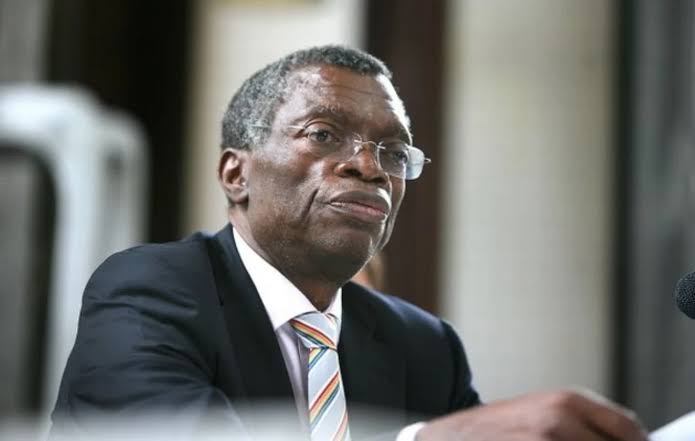
Pius Langa Biography
Pius Nkonzo Langa was a South African lawyer and judge who rose from a modest rural background to become the first black African Chief Justice of South Africa. Born in Bushbuckridge in the former Eastern Transvaal, he devoted his life to the law, human rights, and the building of a fair judicial system for a country that had long denied justice to the majority of its people.
His story is one of persistence and quiet determination. He left formal schooling early to support his family, worked in a factory, and later built a legal career almost entirely through part time study and hard work. By the time he retired from public life, Langa had helped shape South Africa’s Constitution, defended activists during the apartheid era, and led the Constitutional Court through some of the most important years of the country’s young democracy. This article looks at his life, his legal career, his achievements, and the legacy he left behind.
Pius Langa’s Early Life
Pius Nkonzo Langa was born on 25 March 1939 in Bushbuckridge, a town in the Eastern Transvaal, an area that is today part of Mpumalanga province in South Africa. He was the second of seven children born into a family led by his father, who worked as a pastor. Growing up under the harsh conditions of racial segregation in South Africa, Langa’s early life was shaped by limited opportunities and financial hardship, circumstances that were common for black South African families of that era.
Because his family could not afford to keep him in school, Langa left his formal education as a teenager and began working to help support his household. In 1957, he took a job at a shirt making factory, a position he held until 1960. Rather than give up on learning, he studied privately during this period and successfully completed his matriculation examination in 1960, an achievement that opened the door to further opportunities.
After matriculating, Langa found work as an interpreter and messenger of the court within the Department of Justice. This role placed him inside the legal system for the first time and gave him a close look at how the law operated, and how unevenly it was applied to black South Africans. It was during these years that his interest in law and justice began to take clearer shape, setting the foundation for the remarkable career that followed.
Where Pius Langa Was From
Pius Langa’s roots trace back to Bushbuckridge, a rural town that sits at the foot of the Drakensberg escarpment in what was then the Eastern Transvaal region of South Africa. Today, Bushbuckridge falls under Mpumalanga province, close to the border with Limpopo, and it remains a predominantly rural area known for its farming communities and proximity to the Kruger National Park.
Langa came from a Zulu speaking family, and his father’s work as a pastor meant that religious values and discipline played an important part in his upbringing. Life in Bushbuckridge during the 1940s and 1950s was defined by the broader political and social conditions of segregation era South Africa, where access to quality education, healthcare, and economic opportunity was severely restricted for black communities.
Despite these limitations, the values instilled in Langa during his early years in Bushbuckridge, particularly his strong work ethic and commitment to self improvement through education, remained central to his character throughout his life. He often credited his humble beginnings with shaping his understanding of ordinary people’s struggles, an understanding that later informed his approach to the law and his judgments on the Constitutional Court.
Pius Langa’s Career
Langa’s professional life spanned several decades and included work as a civil servant, an advocate, a defender of political activists, and eventually the highest judicial office in South Africa. His career can be understood in distinct stages, each of which built on the one before it.
Working in the Department of Justice
After completing his matriculation, Langa joined the Department of Justice as an interpreter and messenger of the court. Through diligence and steady progress, he worked his way up within the department, eventually serving as a prosecutor and later as a magistrate. This period gave him firsthand experience of the justice system from the inside, including its many shortcomings under apartheid law.
While working full time, Langa pursued a law degree through the University of South Africa, studying by correspondence since he could not attend classes in person. He completed his B Juris degree in 1973 and followed this with an LLB degree in 1976, a significant accomplishment given that he balanced full time employment with years of part time study.
Becoming an Advocate
In April 1977, Langa resigned from the Department of Justice. Later that same year, in June 1977, he was admitted as an advocate of the Supreme Court in Natal. This marked the beginning of his career as a practising lawyer, and he went on to build his practice at the Durban Bar.
Defending Anti-Apartheid Activists
As an advocate in Durban, Langa took on both civil and criminal matters, but he became particularly known for his defence of individuals accused of political offences under apartheid legislation. At a time when the courts were frequently used as tools of political repression, Langa represented anti-apartheid activists facing prosecution, often under difficult and hostile conditions. His legal work during this period placed him firmly within the broader struggle against apartheid, even though his role was that of a lawyer rather than a political organiser.
Langa’s commitment to justice extended beyond the courtroom. He was a founding member of the Release Mandela Committee in Natal, a group formed to campaign for the release of Nelson Mandela and other political prisoners. He also served on committees working to prepare for the eventual release of political prisoners and was active in the United Democratic Front, a coalition of anti-apartheid organisations. His involvement continued into the early 1990s, when he took part in the work of the Convention for a Democratic South Africa and its successor, the Multi Party Negotiating Forum, both of which played central roles in South Africa’s transition to democracy.
In January 1994, shortly before South Africa’s first democratic elections, Langa became senior counsel, a recognition of his standing and skill as an advocate.
Judge of the Constitutional Court
In October 1994, following South Africa’s transition to democracy, President Nelson Mandela appointed Langa as one of eleven judges to serve on the newly established Constitutional Court of South Africa. The court itself began its work in February 1995, and Langa’s appointment placed him at the centre of the new constitutional order being built in the country. As one of the founding judges, he helped interpret and apply South Africa’s new Constitution during its earliest and most formative years.
His first major judgment as a member of the court came in the 1995 case of S v Williams, in which the court ruled that judicial corporal punishment of juveniles was unconstitutional. This early ruling set an important precedent for how the court would approach questions of human dignity and children’s rights under the new Constitution.
Deputy President and Deputy Chief Justice
In August 1997, Langa was appointed Deputy President of the Constitutional Court, a position he held until November 2001. Later that year, he was appointed Deputy Chief Justice of South Africa, succeeding Hennie van Heerden in that role. He continued to serve in this capacity until May 2005, working closely with then Chief Justice Arthur Chaskalson.
Chief Justice of South Africa
On 1 June 2005, President Thabo Mbeki appointed Pius Langa as Chief Justice of South Africa, making him the head of the Constitutional Court. This appointment was historic, as Langa became the first black African to hold the position of Chief Justice in South Africa’s history. He served in this role until his retirement on 11 October 2009, when he was succeeded by Sandile Ngcobo.
As Chief Justice, Langa led the court through a demanding political climate. The judiciary frequently faced criticism and pressure from political figures during this period, and the Constitutional Court under his leadership saw an increase in the number of dissenting judgments among its justices. Despite these tensions, Langa was widely regarded as having managed the pressures on the judiciary with skill and composure, helping to protect the independence of the courts during a sensitive period in South Africa’s democratic development.
One of his notable contributions during his tenure as Chief Justice was his involvement in establishing the independent Office of the Chief Justice. This move helped shift the administration of the court system away from the Department of Justice and toward a structure more directly accountable to the judiciary itself, strengthening the separation of powers between the executive and the courts.
Academic and Advisory Roles
Beyond the bench, Langa contributed to legal education and public life in several other capacities. In October 1998, he was installed as Chancellor of the University of Natal, a ceremonial but respected position within the university’s leadership structure. He also served as a distinguished visiting professor at Southern Methodist University in Dallas, sharing his legal expertise with students outside South Africa. Throughout his career, he served on numerous boards, trusts, and committees connected to legal institutions, including the Community Legal Services Unit.
Pius Langa’s Awards and Honours
Langa’s contribution to law and human rights in South Africa earned him wide recognition both at home and abroad. On 22 April 2008, President Thabo Mbeki bestowed upon him the Order of the Supreme Counsellor of the Baobab in Gold, one of South Africa’s highest national honours, awarded in recognition of his exceptional service to the country.
He also received honorary Doctor of Laws degrees from a number of respected universities, including the University of Cape Town, the University of the Western Cape, the University of Zululand, Rhodes University, the University of South Africa, Yale University in the United States, and the National University of Ireland. In addition, he was awarded an honorary Doctor of Public Service degree by Northeastern University in Boston, Massachusetts. These honorary degrees reflected the international respect he earned for his role in building South Africa’s constitutional democracy and his lifelong dedication to justice and human rights.
Pius Langa’s Personal Life
Langa married in 1966, and he and his wife went on to raise six children together. His wife passed away in August 2009, shortly after his retirement as Chief Justice, a loss that came at what should otherwise have been a peaceful new chapter in his life following decades of public service.
Langa came from a family with strong ties to South Africa’s legal and political life. His brothers, Bheki Langa, Mandla Langa, and Ben Langa, were also known figures, with Mandla Langa becoming a respected writer and Ben Langa having been active in anti-apartheid politics before his death in the 1980s. This family background reflected the broader Langa family’s deep involvement in the struggle against apartheid and the building of a democratic South Africa.
Outside of his judicial duties, Langa was known as someone deeply committed to mentoring young people and supporting causes related to the underprivileged. Colleagues and observers often described him as approachable, principled, and consistent in applying the values he had developed since his early years in Bushbuckridge.
Pius Nkonzo Langa passed away on 24 July 2013 at Milpark Hospital in Johannesburg, at the age of 74. His death was marked with tributes from across South Africa’s legal and political community, recognising his role in shaping the country’s constitutional order during its first, formative years of democracy.
Conclusion
Pius Langa’s life reflects the story of a man who overcame significant personal and social obstacles to become one of South Africa’s most respected legal figures. From a factory worker studying privately for his matric certificate to the first black African Chief Justice of South Africa, his journey illustrates the value of persistence, education, and a firm commitment to justice. His work defending anti-apartheid activists, his contribution to the founding years of the Constitutional Court, and his leadership as Chief Justice all played a part in shaping the legal foundations of democratic South Africa. Though he passed away in 2013, his influence on South African law and his example of quiet, determined service continue to be remembered.
FAQs
Who was Pius Langa?
Pius Langa was a South African lawyer and judge who served as Chief Justice of South Africa from 2005 to 2009. He was the first black African to hold this position and had previously served as a judge of the Constitutional Court since its establishment in 1995.
When and where was Pius Langa born?
He was born on 25 March 1939 in Bushbuckridge, a town in the Eastern Transvaal, an area now part of Mpumalanga province in South Africa.
What is Pius Langa best known for?
He is best known for becoming South Africa’s first black African Chief Justice, for his work defending anti-apartheid activists as an advocate in Durban, and for his role as one of the founding judges of the Constitutional Court of South Africa.
Did Pius Langa study law full time?
No, Langa studied law through the University of South Africa by correspondence while working full time in the Department of Justice. He completed his B Juris in 1973 and his LLB in 1976 through part time study.
What awards did Pius Langa receive?
He received the Order of the Supreme Counsellor of the Baobab in Gold from President Thabo Mbeki in 2008, along with several honorary doctorate degrees from universities including Cape Town, Yale, Rhodes, and the National University of Ireland.
When did Pius Langa pass away?
Pius Langa passed away on 24 July 2013 at Milpark Hospital in Johannesburg, South Africa, at the age of 74.
Who succeeded Pius Langa as Chief Justice of South Africa?
Sandile Ngcobo succeeded Pius Langa as Chief Justice of South Africa when Langa retired on 11 October 2009.