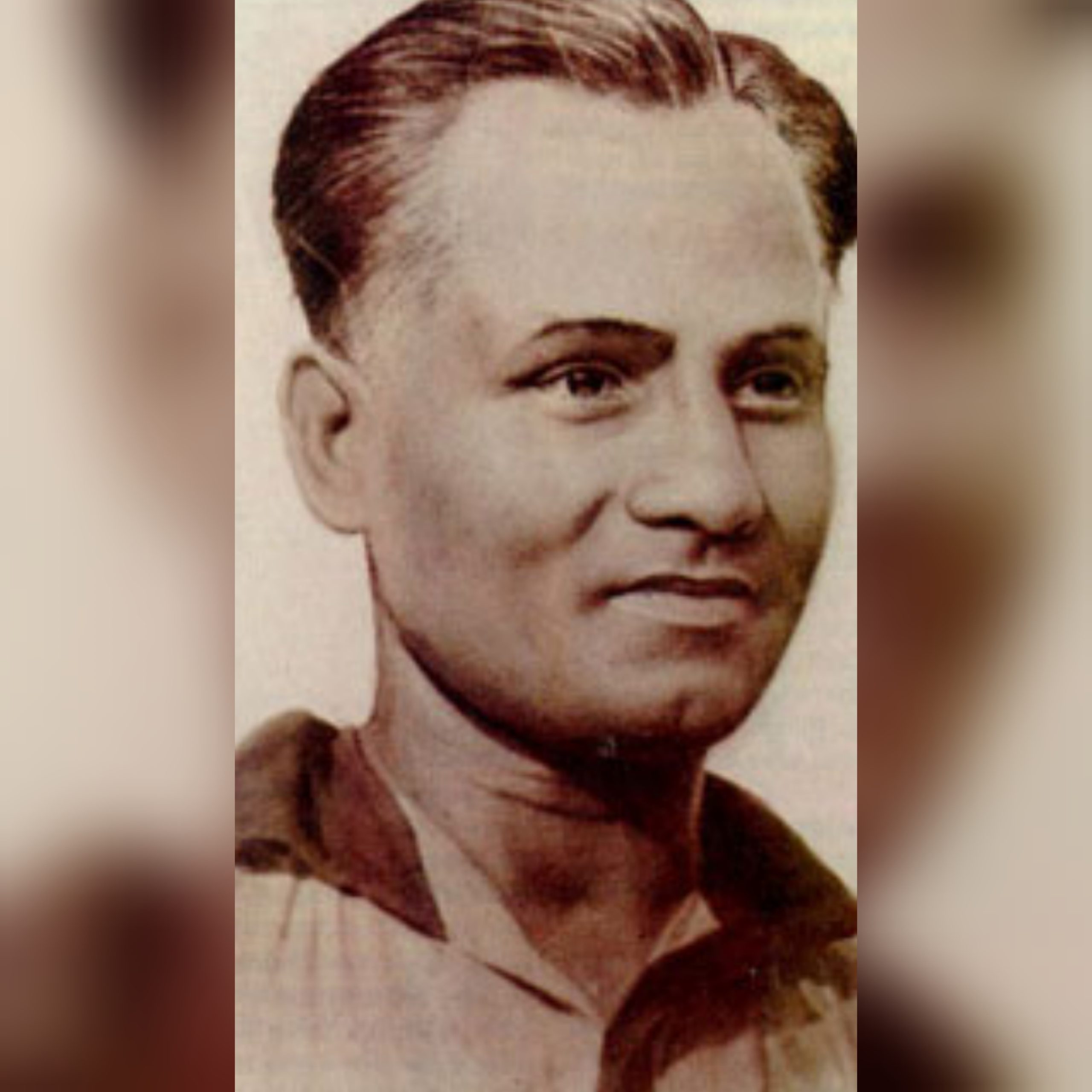
Major Dhyan Chand Biography
Major Dhyan Chand Singh Bais was born in Allahabad, which is now known as Prayagraj in Uttar Pradesh, India. He was an Indian national and remains one of the most celebrated figures in the history of field hockey. Widely known as the Wizard of Hockey or the Magician, he transformed the sport through unmatched ball control, vision, and goal scoring ability during a period when India established itself as a dominant force on the international stage.
This biography presents a clear account of his life from humble beginnings in a military family to Olympic triumphs and lasting influence on Indian sports. It draws on verified historical records of his achievements, military service, and personal journey while highlighting the values of discipline and dedication that defined him.
Major Dhyan Chand Early Life
Major Dhyan Chand was born on 29 August 1905 in Allahabad, then part of the United Provinces of Agra and Oudh in British India. His full name at birth was Dhyan Singh Bais. He belonged to a Bais Rajput family. His father, Sameshwar Dutt Singh Bais, served as a subedar in the British Indian Army and played hockey for his regiment. His mother was Sharadha Singh. The family included two brothers, Mool Singh and Roop Singh. Roop Singh later became a noted hockey player who competed alongside his brother in the Olympics.
Because of his father’s army postings, the family moved frequently across different locations. This disrupted formal education. Dhyan Chand completed only about six years of schooling. The family eventually settled in Jhansi, Uttar Pradesh, which became his home and remained closely associated with his life. Jhansi is located in the Bundelkhand region of Uttar Pradesh, a state in northern India known for its historical significance and cultural heritage. The area offered a modest setting where young Dhyan Chand grew up with limited resources but developed physical strength and resilience.
As a child, he showed more interest in wrestling than in organized sports. He recalled playing informal games of hockey with friends in Jhansi using simple equipment, but he did not pursue the sport seriously at first. The military environment around him provided early exposure to physical training and team activities. These experiences laid the groundwork for the discipline that later shaped his career. The frequent moves and modest circumstances taught him adaptability and focus, qualities that became central to his approach on the field.
Major Dhyan Chand State of Origin and Roots in Uttar Pradesh
Uttar Pradesh holds a special place in the story of Major Dhyan Chand. Born in Allahabad, now Prayagraj, he spent his formative years and later life connected to Jhansi. Uttar Pradesh, one of India’s largest states by population, has a rich history that includes the freedom struggle and diverse cultural traditions. Jhansi itself is famous for its historical fort and the role of Rani Lakshmibai in the 1857 uprising. The city’s sports culture and military presence influenced many young people of that era.
The family’s settlement in Jhansi provided stability after years of movement. His father received a small piece of land there, allowing the household to put down roots. This grounding in Uttar Pradesh shaped Dhyan Chand’s identity. Even as his fame grew internationally, he returned to Jhansi and considered it home. The state’s association with him continues through local memorials and the pride residents take in his achievements. Understanding this background helps explain the grounded character he maintained throughout his public life.
Major Dhyan Chand Entry into the Army and Discovery of Hockey
In 1922, at the age of 16 or 17, Dhyan Chand joined the British Indian Army as a sepoy in the 1st Brahmans regiment in Delhi. He later served with units connected to the Punjab Regiment. Military life brought structure and regular physical activity. Hockey was popular among army units, and inter-regimental tournaments offered opportunities to play.
His talent emerged under the guidance of Subedar Major Bale Tiwari, who recognized potential in the young soldier and trained him. Dhyan Chand practiced rigorously, often continuing alone after duty hours under moonlight. This habit led fellow soldiers to call him Chand, meaning moon. The name stuck and became part of his identity. He improved rapidly through consistent effort rather than formal coaching in the modern sense. Army competitions sharpened his skills in ball control, positioning, and finishing.
By the mid-1920s, his performances stood out. Selection for the Indian Army team’s tour of New Zealand in 1926 marked his entry into higher-level play. On that tour he scored prolifically and drew attention for his instinctive understanding of the game. This experience confirmed that hockey would define his path. The army provided both livelihood and the platform for sporting growth, allowing him to balance military duties with athletic development.
Major Dhyan Chand Career
Major Dhyan Chand’s international career spanned from 1926 to 1949. He played as a centre-forward and became known for extraordinary stick work that made the ball appear glued to his stick. According to his autobiography Goal, he scored 570 goals in 185 international matches. Estimates of his total career goals, including domestic games, exceed 1,000. He helped establish India’s dominance in field hockey during an era when the sport featured limited competition outside Europe and a few other regions.
Major Dhyan Chand Rise Through International Tours
The 1926 New Zealand tour launched his reputation. Strong performances followed in domestic competitions and further tours. In 1932, during a world tour associated with the Los Angeles Olympics, he contributed heavily to India’s success, scoring a large share of the team’s goals. A notable 1935 tour of New Zealand and Australia saw him score 201 goals in 43 matches. These exhibitions demonstrated consistent excellence against varied opposition and built anticipation for Olympic appearances.
Major Dhyan Chand 1928 Amsterdam Olympics
India made its Olympic hockey debut in 1928. Dhyan Chand scored 14 goals across the tournament. India remained undefeated and did not concede a goal in the competition. In the final, India defeated the Netherlands 3-0, with Dhyan Chand scoring two of the goals. This victory delivered India’s first Olympic gold medal in any sport and announced the arrival of a new power in hockey. Observers described his play as magical, with some reports noting that officials inspected his stick for magnets.
Major Dhyan Chand 1932 Los Angeles Olympics
India defended the title successfully. The team included his brother Roop Singh. In one match against the United States, India won 24-1. Dhyan Chand scored eight goals while Roop Singh scored ten. Against Japan the score was 11-1. India finished with another gold. The margin of victory against the hosts remains one of the largest in Olympic hockey history. These results reinforced India’s superiority and elevated Dhyan Chand’s status further.
Major Dhyan Chand 1936 Berlin Olympics
As captain, Dhyan Chand led India to a third consecutive gold. The team scored 38 goals and conceded only one across the tournament. In the final against host Germany, India won 8-1. Dhyan Chand scored three goals. During the match he lost a tooth after a collision and later played part of the second half barefoot for better speed on the wet ground. Stories from the period include reports that Adolf Hitler was impressed by his performance, though details of any personal offer vary across accounts and remain partly anecdotal. The victory completed a historic hat-trick of Olympic golds.
Major Dhyan Chand Later Years and Retirement from Playing
World War II interrupted international competition. Dhyan Chand continued domestic play and later joined a 1947 tour of East Africa, scoring 61 goals in 22 matches at the age of 42. He declined selection for the 1948 London Olympics, which India also won. His final international appearances came around 1948 or 1949. Throughout his career he maintained high standards of fitness and sportsmanship. The army supported his participation, and promotions reflected both military service and sporting contributions. He rose to the rank of Major by the time of his military retirement in 1956.
Major Dhyan Chand Playing Style and Technical Mastery
Observers and teammates consistently highlighted his ball control, body feints, and ability to score from difficult angles. He combined speed with precise stick work and an intuitive sense of space. Rather than relying solely on power, he used subtle changes of direction and timing to outmaneuver defenders. This approach influenced generations of Indian forwards. Practice under limited conditions in the army built the foundation for these skills. His style remained effective against stronger physical opponents because of superior technique and anticipation.
Major Dhyan Chand Awards and Honours
In 1956 the Government of India awarded him the Padma Bhushan, the country’s third-highest civilian honour at the time. This recognition came in the same year as his retirement from the army. His birthday, 29 August, has been observed as National Sports Day in India since 1995. The Major Dhyan Chand National Stadium in New Delhi carries his name. The Major Dhyan Chand Award for lifetime achievement in sports was instituted in 2002. In 2021 India’s highest sporting honour, previously the Rajiv Gandhi Khel Ratna, was renamed the Major Dhyan Chand Khel Ratna Award. A commemorative postage stamp has also been issued in his honour. These tributes reflect the enduring respect for his contributions.
Major Dhyan Chand Personal Life
Dhyan Chand married Janaki Devi in 1936, shortly before the Berlin Olympics. The couple made their home in Jhansi and raised a large family. Accounts indicate they had seven sons and several daughters. One son, Ashok Kumar, followed in the family tradition and represented India in hockey. Ashok Kumar won a bronze medal at the 1972 Munich Olympics and scored the winning goal in the 1975 World Cup final. Other sons pursued sports or coaching at various levels.
Family life remained relatively private. Dhyan Chand valued simplicity and spent time in Jhansi engaging in activities such as fishing, hunting, and cooking. He enjoyed mutton and fish dishes. After retirement from active play he served as a coach, including a period as chief coach at the National Institute of Sports in Patiala. Later years brought financial difficulties and health challenges. He was diagnosed with liver cancer and received treatment at the All India Institute of Medical Sciences in New Delhi. He passed away on 3 December 1979 at the age of 74. His funeral took place in Jhansi, connected to the ground associated with his early days.
Major Dhyan Chand Legacy and Influence on Indian Hockey
India won seven of eight Olympic hockey golds between 1928 and 1964, a period strongly shaped by the standards Dhyan Chand set. His success inspired players across the country and helped popularize the sport. The nickname Wizard of Hockey endures in public memory. Memorials, stadiums, and awards keep his name prominent. National Sports Day features events that encourage participation in sports among young people. His autobiography Goal provides firsthand accounts of his experiences and remains a valuable record. Despite challenges in his later years, the recognition he received after his death has grown steadily, ensuring that new generations learn about his achievements.
Conclusion
Major Dhyan Chand’s life illustrates how talent combined with discipline and opportunity can produce lasting excellence. From a modest military family in Uttar Pradesh he rose to become a global sporting icon through consistent hard work and natural gift for the game. His three Olympic gold medals and extraordinary scoring record established benchmarks that still inspire. The values he demonstrated on and off the field continue to resonate in Indian sports culture. Remembering his journey offers a reminder of the power of dedication and the importance of honouring those who elevate national pride through athletic achievement.
FAQs
What was Major Dhyan Chand’s full name and when was he born?
His full name was Dhyan Singh Bais, later known as Major Dhyan Chand. He was born on 29 August 1905 in Allahabad, now Prayagraj, Uttar Pradesh.
How many Olympic gold medals did Major Dhyan Chand win?
He won three consecutive Olympic gold medals in field hockey with the Indian team in 1928, 1932, and 1936.
Why was Major Dhyan Chand called the Wizard of Hockey?
The nickname came from his exceptional ball control and ability to score goals in ways that appeared magical to spectators and opponents.
Where did Major Dhyan Chand settle and why is Jhansi important?
The family settled in Jhansi, Uttar Pradesh, after years of army-related moves. It became his home, and he remained connected to the city throughout his life.
What awards did Major Dhyan Chand receive?
He received the Padma Bhushan in 1956. National Sports Day falls on his birthday, and major awards and a stadium are named after him.
Did any of Major Dhyan Chand’s family members play hockey?
Yes. His brother Roop Singh won Olympic golds with him. His son Ashok Kumar represented India and contributed to the 1975 World Cup victory.
When did Major Dhyan Chand retire and when did he die?
He retired from international hockey around 1949 and from the army in 1956 as a Major. He died on 3 December 1979 in New Delhi.
Leave a Reply