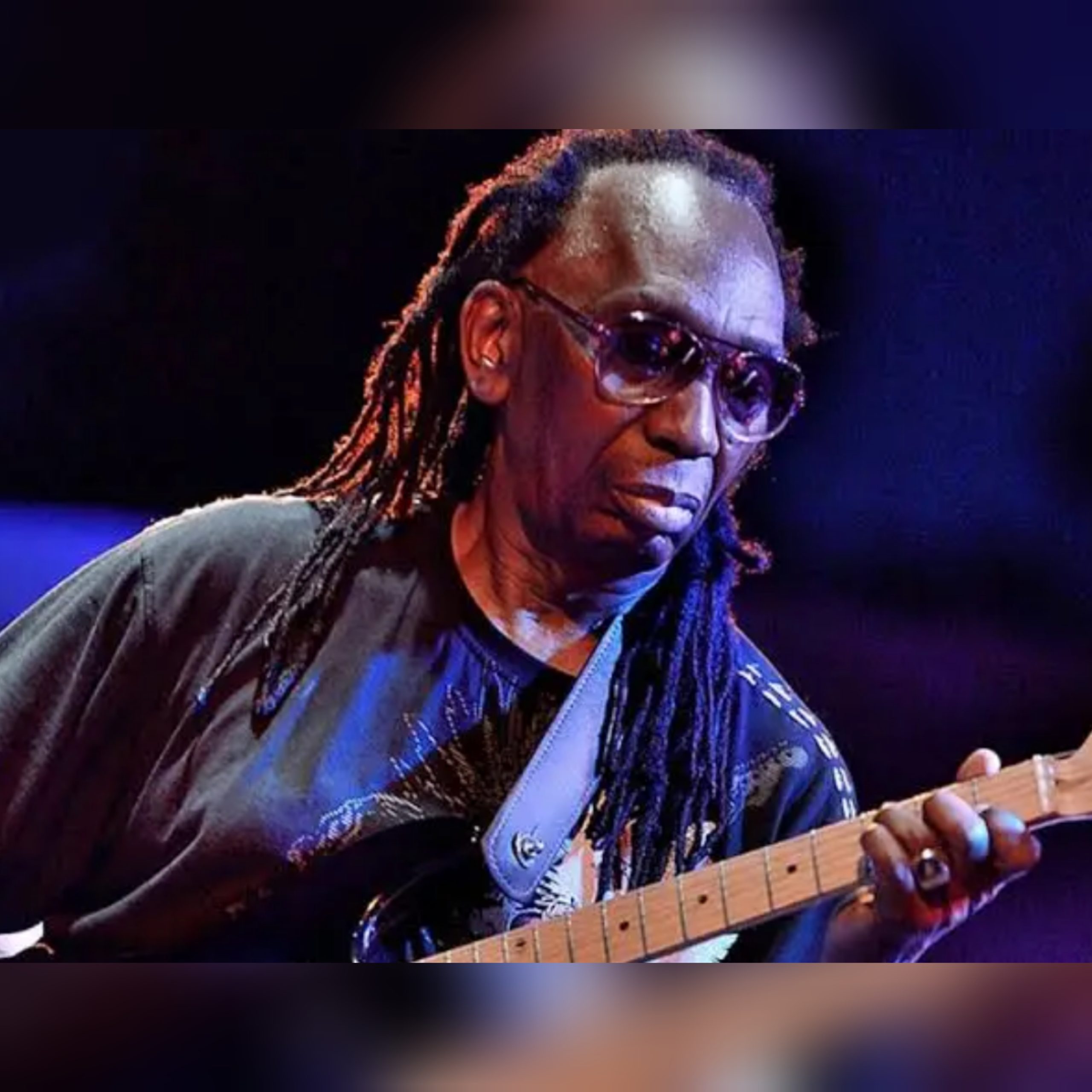
Thomas Mapfumo Biography
Thomas Tafirenyika Mapfumo was born in Marondera in what was then Southern Rhodesia and is now Zimbabwe. He is a Zimbabwean musician widely known as the Lion of Zimbabwe and by the Shona praise name Mukanya. His work shaped a distinctive style of popular music that drew on traditional Shona sounds while addressing the social and political realities of his country.
Mapfumo’s career spans more than six decades. He moved from performing Western-style covers in the 1960s to creating and popularising Chimurenga music, a form that blended electric instruments with the rhythms and spirit of the mbira. His songs supported the struggle for independence and later criticised the shortcomings of the post-independence government. He spent years in exile in the United States yet continued to record and perform for audiences at home and abroad. This account traces his life from rural childhood through musical innovation, political engagement, personal challenges and lasting cultural influence.
Thomas Mapfumo Early Life
Thomas Tafirenyika Mapfumo was born on 2 July 1945 in Marondera, a town in Mashonaland East Province in Southern Rhodesia. The region forms part of the broader Mashonaland area historically associated with the Shona people, the largest ethnic group in present-day Zimbabwe. Marondera lies southeast of the capital, then called Salisbury and now Harare. At the time of his birth the country was a British colony under white minority rule. Mapfumo’s early years were spent in a traditional rural Shona setting with his maternal grandparents. He herded cattle, took part in village life and absorbed the sounds of ngoma drums, hosho rattles and the mbira, an instrument of spiritual importance in Shona culture. His grandparents were musicians who hosted gatherings featuring these instruments, giving the young boy direct exposure to the music that would later define his own work.
His biological parents were Janet Chinhamo, from the Chihota area, and Tapfumaneyi Makore (also referred to in some accounts as Mupariwa), a Korekore Shona man from the Guruve district near the Dande valleys. The couple did not remain together. Janet later married John Kashesha Mapfumo, a mechanic of mixed Shona and European heritage who worked in the urban townships. The boy was initially known as Michael Munhumumwe, taking a surname linked to his maternal side. When the time came for official identity documents, an uncle assisted with registration and the name Thomas entered the records. He grew up using the Mapfumo surname associated with his stepfather’s household and became known by it in music circles.
Around the age of ten the family moved him from the rural farm environment into the urban township of Mbare in Salisbury. Mbare was a crowded black residential area marked by poverty, police presence and early currents of political protest against colonial rule. The contrast between quiet rural life and the denser, more turbulent township left a strong impression. In Mbare he first heard radio broadcasts that brought African jazz from South Africa and Zimbabwe, Congolese rumba and American rhythm and blues and soul. He attended primary school, first in the Marondera area and later at Donnybrook School after the move to the city. The household under John and Janet Mapfumo was strict and church-oriented, yet the traditional spiritual and musical world of his grandparents remained part of his identity. He later sought out his biological father and maintained contact until the older man’s death in the early 1970s. These layered family experiences, rural tradition and urban exposure formed the foundation for the musician he would become.
Thomas Mapfumo Career
Mapfumo began performing in his mid-teens. At about sixteen he joined a local group known as the Zutu Brothers (some accounts refer to the Cyclones). He continued through a series of bands that specialised in cover versions of American and British popular music. Groups such as the Springfields and the Cosmic Dots played songs associated with Elvis Presley, Otis Redding and other contemporary stars. He also worked with musicians including Oliver Mtukudzi and James Chimombe in the Wagon Wheels. During this period he took various jobs, including work connected with a chicken-rearing project at a mining town, an experience that later inspired a band name.
Formation of the Hallelujah Chicken Run Band
In the early 1970s Mapfumo moved toward original material rooted in Shona tradition. He formed the Hallelujah Chicken Run Band while based near a mining community. With guitarist Joshua Hlomayi Dube he began translating the interlocking patterns of the mbira onto electric guitar. Lyrics shifted from English to Shona. The band’s music still mixed rock and soul elements with local melodies, yet the direction was clear: music that spoke to local audiences in their own language and drew on ancestral sounds. Songs addressed rural life, farming and the growing sense of national identity.
Rise of Chimurenga Music with the Acid Band and Blacks Unlimited
By the mid-1970s the political climate in Rhodesia had intensified. Guerrilla fighters opposing white minority rule used the Shona term chimurenga, meaning struggle or uprising. Mapfumo adopted the word for the style he was developing. In 1976 or 1977 he worked with the Acid Band. Their recording of “Hokoyo!” (Watch Out!) carried messages that the Rhodesian authorities found threatening. The song was banned from state radio yet circulated widely through other channels. Mapfumo was detained without formal charges for about three months in 1979. Public pressure and the lack of evidence led to his release. He continued performing and recording.
Around 1978 the group evolved into Thomas Mapfumo and the Blacks Unlimited. Guitarists such as Jonah Sithole helped refine the electric adaptation of mbira patterns. Drums evoked the stamping of traditional dancers. The band’s music combined these elements with horns, bass and Mapfumo’s distinctive vocal style, often slow and deliberate. Lyrics spoke of hardship in the communal lands, the call for young people to join the struggle and the need to reclaim cultural pride. Albums from this period include Hokoyo! (1978) and Gwindingwi Rine Shumba (1980 or 1981).
Independence arrived in 1980. Mapfumo and the Blacks Unlimited shared the stage with Bob Marley and the Wailers at a major celebration concert in the capital. The new government of Robert Mugabe initially appeared aligned with the values expressed in chimurenga songs. Mapfumo continued releasing albums through the 1980s, among them Ndangariro, Mabasa, Chimurenga for Justice and Zimbabwe Mozambique. He incorporated actual mbira players into the band and experimented with reggae influences while keeping the core Shona rhythmic foundation.
Later Career and Political Critique
By the late 1980s Mapfumo’s lyrics turned critical of corruption and unfulfilled promises under the post-independence administration. The 1989 album Corruption, released internationally on the Mango label, marked a clear shift. Subsequent releases such as Hondo (War) addressed ongoing social problems including conflict, disease and the erosion of traditional culture. Government harassment increased. Accusations and pressure made continued residence difficult. In 2000 Mapfumo relocated with family members to Eugene, Oregon, in the United States. From exile he kept recording. Notable later works include Chimurenga Explosion, Rise Up (issued by Real World Records), Exile and Danger Zone. He performed internationally and maintained contact with Zimbabwean audiences through recordings and occasional visits after political changes in 2017. In April 2018 he returned for a major homecoming concert in Harare, his first performance in the country in many years.
Selected Albums and Notable Songs
Mapfumo’s recorded output is extensive. Key albums include:
- Hokoyo! (1978)
- Gwindingwi Rine Shumba (1981)
- Ndangariro (1983)
- Mabasa (1983)
- Chimurenga for Justice (1985)
- Mr Music (Africa) (1985)
- Zimbabwe Mozambique (1988)
- Corruption (1989)
- Chamunorwa (1989)
- Hondo (1991)
- Chimurenga Explosion (2000)
- Rise Up (2005/2006)
- Exile (2010)
- Danger Zone (2015)
Songs that became widely known include “Hokoyo,” “Bhutsu Mutandarika,” “Corruption,” “Jojo,” “Kariba,” “Ngoma Yekwedu” and many others that address social conditions, cultural identity and political accountability. His work has appeared on numerous compilations of Zimbabwean and African music.
Thomas Mapfumo Musical Style and Influences
Chimurenga music rests on the translation of mbira patterns to the electric guitar. The mbira’s interlocking lines create a continuous, cyclical texture. Mapfumo and his guitarists reproduced this quality with amplified instruments while adding bass, drums and, later, horns and keyboards. Vocals are often delivered in a measured, resonant style that prioritises clarity of message over virtuosic display. Lyrics in Shona carry layered meanings that can be both direct and metaphorical. Early influences included the traditional music of his grandparents, urban radio broadcasts of African and American popular styles, and the practical experience of playing covers in township bands. Over time the music absorbed elements of reggae and other African forms without losing its Shona rhythmic centre. The style influenced later Zimbabwean artists and helped introduce mbira-derived sounds to international world-music audiences.
Thomas Mapfumo Personal Life
Mapfumo’s personal life has included several marriages and a large family. One early relationship was with a woman of Malawian origin named Emily; they had a daughter, Charity. A subsequent marriage to Elizabeth produced two daughters, Janet and Charmaine, who later settled in the United Kingdom. His marriage to Verna (also referred to as Vena), originally from the Mutare area and raised in Bulawayo, produced a son, Tapfumaneyi (named after the biological grandfather), and two daughters, Chiedza and Matinyaya. The family moved with him to Oregon. One daughter trained as a medical doctor in the United States. His half-brother Lancelot Mapfumo, a percussionist who performed with the band, died in 2022. Mapfumo has spoken of the importance of both his stepfather John, who provided education and stability, and his biological father. Reports of marital difficulties and financial pressures have appeared in Zimbabwean media, yet family members have remained part of his life across continents.
Thomas Mapfumo Exile and Return
The decision to leave Zimbabwe around 2000 followed years of tension with the authorities. From Oregon he continued to compose and record music that addressed conditions in his homeland. Recordings made in exile were sometimes banned from state radio in Zimbabwe yet reached listeners through other means. After the political transition that removed Robert Mugabe from power in 2017, Mapfumo felt able to return. The April 2018 concert in Harare drew large crowds and marked a public reconnection with audiences who had followed his work for decades. He has since made additional visits while maintaining a base in the United States.
Thomas Mapfumo Awards and Recognition
Mapfumo has received formal honours that acknowledge both his musical innovation and his public stance. In 1999 the University of Zimbabwe awarded him an honorary master’s degree in recognition of his advocacy. In 2000 he was named Zimbabwe’s Person of the Century in the arts. In 2001 Ohio University conferred an honorary doctorate in music. The same year his album Chimurenga Explosion received the AFIM Best World Contemporary CD Award. He performed at Carnegie Hall in New York in 2012. In 2018 he received a World Music Award at Globalfest in New York. These recognitions sit alongside the informal titles given by the public, including Lion of Zimbabwe and Mukanya.
Thomas Mapfumo Legacy in Zimbabwean Music
Mapfumo’s principal contribution is the creation and sustained development of Chimurenga as a living popular form. By placing Shona language and mbira-derived patterns at the centre of electric band music he offered a model of cultural confidence during a period of political upheaval. His willingness to criticise successive governments, first the Rhodesian administration and later the post-independence leadership, established a precedent for socially engaged popular music in Zimbabwe. Younger musicians have drawn on the style he pioneered. Internationally he helped bring Zimbabwean traditional elements into the broader category of world music. His recordings remain available and continue to be studied for their musical structure and historical context.
Conclusion
Thomas Tafirenyika Mapfumo’s life traces a path from rural Mashonaland East childhood through the townships of colonial Salisbury, the creation of a new musical language and decades of public commentary on power and justice. He turned the sounds of the mbira and the language of the Shona people into a vehicle that accompanied a national struggle and later held a mirror to the independent state. Exile did not silence him; return concerts reaffirmed his place in the cultural memory of Zimbabwe. His body of work stands as a detailed record of a country’s turbulent modern history expressed through song. Listeners continue to find in his music both the rhythms of tradition and the clear voice of someone who refused to look away from the conditions around him.
FAQs
What is Thomas Mapfumo’s full name and when was he born?
Thomas Tafirenyika Mapfumo was born on 2 July 1945 in Marondera, Mashonaland East, then part of Southern Rhodesia.
What is Chimurenga music?
Chimurenga is a style developed by Mapfumo that combines traditional Shona mbira patterns and rhythms with electric guitars, drums and other modern instruments. Lyrics are typically in Shona and address social and political themes. The word itself means struggle or uprising in Shona.
Why was Thomas Mapfumo imprisoned?
In 1979 the Rhodesian authorities detained him for approximately three months without formal charges after his music, particularly the song “Hokoyo,” was judged subversive. Public demonstrations and the absence of evidence led to his release.
Where does Thomas Mapfumo live now?
He has maintained a base in Eugene, Oregon, in the United States since around 2000, while making visits to Zimbabwe after 2018.
Which albums are considered among his most important?
Key releases include Hokoyo! (1978), Gwindingwi Rine Shumba, Corruption (1989), Hondo, Chimurenga Explosion and Rise Up. These span his revolutionary period, his critique of post-independence governance and his work in exile.
Did Thomas Mapfumo perform with Bob Marley?
Yes. In 1980 he and the Blacks Unlimited shared the stage with Bob Marley and the Wailers at a major independence celebration concert in the Zimbabwean capital.
What awards has Thomas Mapfumo received?
He has received an honorary master’s degree from the University of Zimbabwe (1999), recognition as Zimbabwe’s Person of the Century in the arts (2000), an honorary doctorate from Ohio University (2001), the AFIM Best World Contemporary CD Award for Chimurenga Explosion, and a World Music Award at Globalfest in 2018, among other honours.