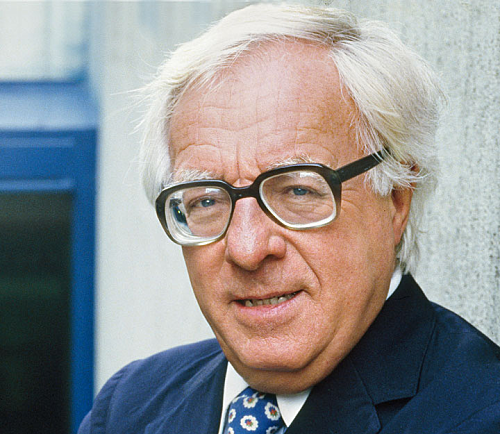
Ray Douglas Bradbury was born in Waukegan, Illinois, in the United States and held American nationality throughout his life. He became one of the most widely read and influential writers of the twentieth century, known for works that mixed science fiction, fantasy, horror, and deeply human storytelling. His books and stories reached millions of readers across languages and generations, shaping how people think about technology, memory, freedom, and the future.
This biography traces his path from a Midwestern childhood filled with libraries, carnivals, and imagination to a long career that produced enduring novels, hundreds of short stories, screenplays, and public advocacy for reading and exploration. It draws on verified records of his life, family, published works, and honors to present a clear account of the man and his contributions.
Ray Bradbury Early Life
Ray Douglas Bradbury was born on August 22, 1920, in Waukegan, Illinois. His father, Leonard Spaulding Bradbury, worked as a lineman for power and telephone utilities. His mother, Esther Moberg Bradbury, was a Swedish immigrant. The family lived in a modest home in a city set on a bluff overlooking Lake Michigan, about forty miles north of Chicago. Waukegan combined industrial activity with neighborhoods of tree-lined streets, ravines, and a Carnegie library that young Ray visited often.
Bradbury was the third child. Twin brothers had been born earlier; one, Samuel, died as a toddler during the 1918 influenza pandemic. An older brother, Leonard Jr., known as Skip, survived. A sister, Elizabeth, also died young. These early losses left a quiet mark on the household. The family’s English ancestry on the father’s side included a distant relative, Mary Bradbury, who had been convicted during the Salem witch trials but survived the period of hysteria.
Childhood in Waukegan shaped Bradbury’s imagination for the rest of his life. He later transformed the town into the fictional Green Town that appears in several of his books. He explored local ravines, collected comic strips featuring Buck Rogers, and listened to family stories. His mother and aunt read him tales by L. Frank Baum and the Brothers Grimm. He developed a love for silent films, especially those starring Lon Chaney in roles such as the Phantom of the Opera and the Hunchback of Notre Dame. Radio broadcasts and early science fiction magazines like Amazing Stories further fueled his interest in wonder and the unknown.
The Great Depression brought repeated moves. The family spent time in Tucson, Arizona, and briefly elsewhere as Leonard sought steady work. They returned to Waukegan more than once before settling permanently in Los Angeles in 1934, when Ray was fourteen. The move west placed him near Hollywood studios and a larger community of writers and film enthusiasts. He graduated from Los Angeles High School in 1938. He did not attend college, citing cost, and instead educated himself through public libraries while selling newspapers on street corners to earn money.
A pivotal moment came in 1932 during a visit to a traveling carnival. A performer known as Mr. Electrico, surrounded by static electricity, touched the boy on the nose and urged him to “Live forever!” The encounter, combined with introductions to other carnival performers and talk of reincarnation, left a lasting impression. Bradbury later credited it with setting him on the path of daily writing. By his early teens he was composing stories on whatever paper he could find, including butcher paper. He joined the Los Angeles Science Fiction League, where he met and received encouragement from established and emerging writers including Robert Heinlein, Leigh Brackett, Henry Kuttner, and Edmond Hamilton.
Waukegan itself remained central to his sense of place. The city’s location on Lake Michigan, its seasonal rhythms, its public library, and its mix of ordinary American life with undertones of mystery provided the emotional foundation for much of his later fiction. Even after decades in California, he returned in memory and in writing to the Midwestern landscape of his boyhood.
Ray Bradbury Career
Bradbury began publishing in amateur magazines while still a teenager. His first story, “Hollerbochen’s Dilemma,” appeared in 1938 in Imagination!. He produced his own fan magazine, Futuria Fantasia, and continued submitting work. Poor eyesight kept him out of military service during World War II. By 1943 he was writing full time.
His early professional sales went to pulp magazines such as Weird Tales. Stories from this period often mixed horror, fantasy, and sharp observations of ordinary people. Recognition grew when pieces appeared in more prestigious outlets. “The Big Black and White Game” was selected for Best American Short Stories. “Homecoming” earned an O. Henry Award. These successes opened doors beyond the genre magazines.
Breakthrough with The Martian Chronicles
In 1950 Doubleday published The Martian Chronicles, a collection of linked stories about human colonization of Mars and the consequences that follow. The book blended poetic language, social commentary, and speculation about technology and human nature. It established Bradbury as a major voice and moved science fiction closer to mainstream literary attention. Sales and critical notice rose steadily.
Fahrenheit 451 and Other Landmark Works
Fahrenheit 451 appeared in 1953. The novel describes a future society in which books are banned and “firemen” burn them. Bradbury wrote much of it on rented typewriters in the basement of the UCLA library, working in short bursts because of the hourly fee. The book became his best-known work, praised for its defense of reading, free thought, and resistance to censorship and mass media distraction. It has remained in print continuously and is taught in schools worldwide.
Other major books followed. The Illustrated Man (1951) presented stories framed by a tattooed man’s living images. The Golden Apples of the Sun (1953) gathered tales that ranged from space travel to quiet human moments. Dandelion Wine (1957) offered a semi-autobiographical portrait of a boy’s summer in Green Town, capturing the textures of Midwestern childhood with nostalgia and sharp observation. Something Wicked This Way Comes (1962) returned to carnival imagery and the darker side of desire and aging. Later novels included The Halloween Tree (1972), Death Is a Lonely Business (1985), and others that continued exploring memory, mortality, and imagination.
Bradbury produced more than four hundred short stories across his career. Collections such as The October Country, A Medicine for Melancholy, and I Sing the Body Electric kept his shorter work in circulation. He also wrote for radio, television, and film. He contributed the screenplay for John Huston’s 1956 adaptation of Moby Dick. Stories of his were adapted into films including The Beast from 20,000 Fathoms (drawn from “The Fog Horn”) and later versions of The Illustrated Man and Something Wicked This Way Comes. The Martian Chronicles became a television miniseries. For many years he hosted The Ray Bradbury Theater, which dramatized his own stories.
He remained productive into later decades, publishing new collections and novels while speaking widely on the value of libraries, space exploration, and the written word. He never learned to drive and preferred trains for long travel. He wrote almost every day, often by hand or on a typewriter, treating the act of writing itself as essential to living fully.
Ray Bradbury Personal Life
In 1947 Bradbury married Marguerite Susan McClure, known as Maggie. They met in a Los Angeles bookstore where she worked. She was the only woman he dated. In the early years of marriage she provided financial support while he wrote for modest pay. They remained together until her death in 2003. The couple had four daughters: Susan, Ramona, Bettina, and Alexandra. The family lived for decades in the same Los Angeles house. Bradbury raised his children there and later welcomed grandchildren.
He maintained close ties to the science fiction and fantasy community while also moving easily among mainstream literary and Hollywood circles. Friends and collaborators included fellow writers, artists, and filmmakers. He avoided airplanes for many years and kept simple daily routines centered on writing, reading, and family. A stroke in 1999 limited his mobility in later years, yet he continued to produce work and appear in public when possible.
Bradbury’s personal values emphasized curiosity, the importance of books, and hope for the future. He spoke often about the need for libraries and against censorship. He served as an ideas consultant for the United States Pavilion at the 1964 World’s Fair and advocated for space exploration throughout his life. His private life remained largely private; he focused public attention on his stories rather than personal drama.
Ray Bradbury Connection to Waukegan and Illinois
Waukegan and the broader Illinois landscape never left Bradbury’s work. The city of his birth sits on the western shore of Lake Michigan in Lake County. In the early twentieth century it mixed manufacturing, rail connections, and residential neighborhoods. Bradbury’s family roots in the area stretched back generations; earlier Bradburys had been involved in local newspaper publishing and civic life.
The ravines, the library, the seasonal changes, and the sense of a close-knit yet sometimes mysterious small city supplied the atmosphere of Green Town in Dandelion Wine, Something Wicked This Way Comes, and related stories. Even after the family left for California, Bradbury returned in memory and occasionally in person. Local parks and the former Carnegie library building later became associated with his name and legacy. His affection for the Midwest gave his fiction a distinctive emotional texture that set it apart from purely technological or urban science fiction of the same era.
Illinois therefore functions as more than a birthplace in his biography. It is the imaginative ground from which his most personal and nostalgic writing grew.
Ray Bradbury Major Works and Themes
Across novels and stories Bradbury returned to recurring concerns. He examined the double edge of technology: its promise of discovery and its capacity to isolate or control people. Fahrenheit 451 warns against a society that abandons books for shallow entertainment and enforced conformity. The Martian Chronicles explores colonization, loss of cultures, and the persistence of human flaws even on another planet. Dandelion Wine celebrates the intensity of childhood perception and the bittersweet passage of time. Carnival and circus imagery in several works represents both wonder and the darker bargains people make with desire or fear.
His style combined lyrical description with clear, accessible prose. He avoided heavy technical jargon, preferring emotional truth and memorable images. Readers encounter ordinary people facing extraordinary situations, or ordinary situations revealed as extraordinary through careful attention. Nostalgia for a vanishing America appears alongside sharp criticism of modern distractions and the erosion of private thought.
Adaptations extended his reach. Film, television, radio, comics, and stage versions introduced new audiences to his ideas. The Ray Bradbury Theater kept his stories in circulation for years. Later honors recognized both individual works and the cumulative impact of his career.
Ray Bradbury Awards
Bradbury received numerous honors. He earned Hugo Awards and other genre recognitions early on. In 1977 he received a World Fantasy Award for life achievement. The Science Fiction Writers of America named him a Grand Master in 1989. The Horror Writers Association gave him a Bram Stoker Award for lifetime achievement. He was inducted into the Science Fiction Hall of Fame.
In 2000 the National Book Foundation awarded him its Medal for Distinguished Contribution to American Letters. In 2004 President George W. Bush presented him with the National Medal of Arts. In 2007 the Pulitzer Prize Board issued a special citation for his distinguished, prolific, and deeply influential career as an unmatched author of science fiction and fantasy. An Emmy Award recognized his work on the animated adaptation of The Halloween Tree. The Nebula Award for dramatic presentation was later renamed the Ray Bradbury Award in his honor.
These awards reflect both popular success and critical respect across literary and genre boundaries.
Ray Bradbury Influence and Legacy
Bradbury’s influence appears in the work of later writers, filmmakers, and public discussions of censorship and technology. Fahrenheit 451 remains a touchstone in debates about book banning, media saturation, and the value of reading. His lyrical approach helped elevate science fiction and fantasy in the eyes of mainstream critics and educators. Astronauts named a lunar crater after Dandelion Wine, a small but telling acknowledgment of his impact on the culture of space exploration.
He published more than twenty-seven book-length works and hundreds of shorter pieces. Translations carried his stories into dozens of languages. Public libraries, schools, and reading programs continue to feature his books. The Ray Bradbury Center preserves materials related to his life and work. His defense of libraries and free expression remains relevant.
Bradbury died on June 5, 2012, in Los Angeles at the age of ninety-one. He was survived by his four daughters and grandchildren. His ashes rest in Westwood Memorial Park. The body of work he left behind continues to be read, taught, adapted, and discussed.
Conclusion
Ray Douglas Bradbury turned the experiences of a Midwestern boyhood, a lifelong love of storytelling, and a clear-eyed view of human strengths and weaknesses into literature that endures. From Waukegan to Los Angeles, from pulp magazines to international recognition, he remained committed to writing every day and to the belief that stories could change how people see the world. His novels and short stories invite readers to notice beauty, question authority, value memory, and imagine better futures. That invitation continues to find new audiences.
FAQs
When and where was Ray Bradbury born?
Ray Douglas Bradbury was born on August 22, 1920, in Waukegan, Illinois, United States.
What are Ray Bradbury’s most famous books?
His best-known works include The Martian Chronicles (1950), Fahrenheit 451 (1953), Dandelion Wine (1957), and Something Wicked This Way Comes (1962). He also published many highly regarded short story collections.
Did Ray Bradbury write only science fiction?
No. While he is closely associated with science fiction and fantasy, his work also includes horror, realistic fiction, mystery, and autobiographical material. He resisted strict genre labels and preferred to be known simply as a writer of stories.
Who was Ray Bradbury’s wife?
He married Marguerite Susan McClure, known as Maggie, in 1947. They remained married until her death in 2003 and had four daughters together.
What awards did Ray Bradbury receive?
Among many honors, he received the National Medal of Arts in 2004, a special Pulitzer Prize citation in 2007, the National Book Foundation’s Medal for Distinguished Contribution to American Letters, Hugo Awards, a World Fantasy Award for life achievement, and the SFWA Grand Master designation.
Where did Ray Bradbury live most of his adult life?
After moving from Illinois as a teenager, he lived in the Los Angeles area for the rest of his life, raising his family in the same house for more than fifty years.
How did Ray Bradbury’s childhood influence his writing?
His years in Waukegan supplied the setting and emotional tone for Green Town stories such as Dandelion Wine. Libraries, carnivals, films, and family life in a Midwestern town became recurring sources of imagery and themes.
When did Ray Bradbury die?
He died on June 5, 2012, in Los Angeles, California, at the age of ninety-one.