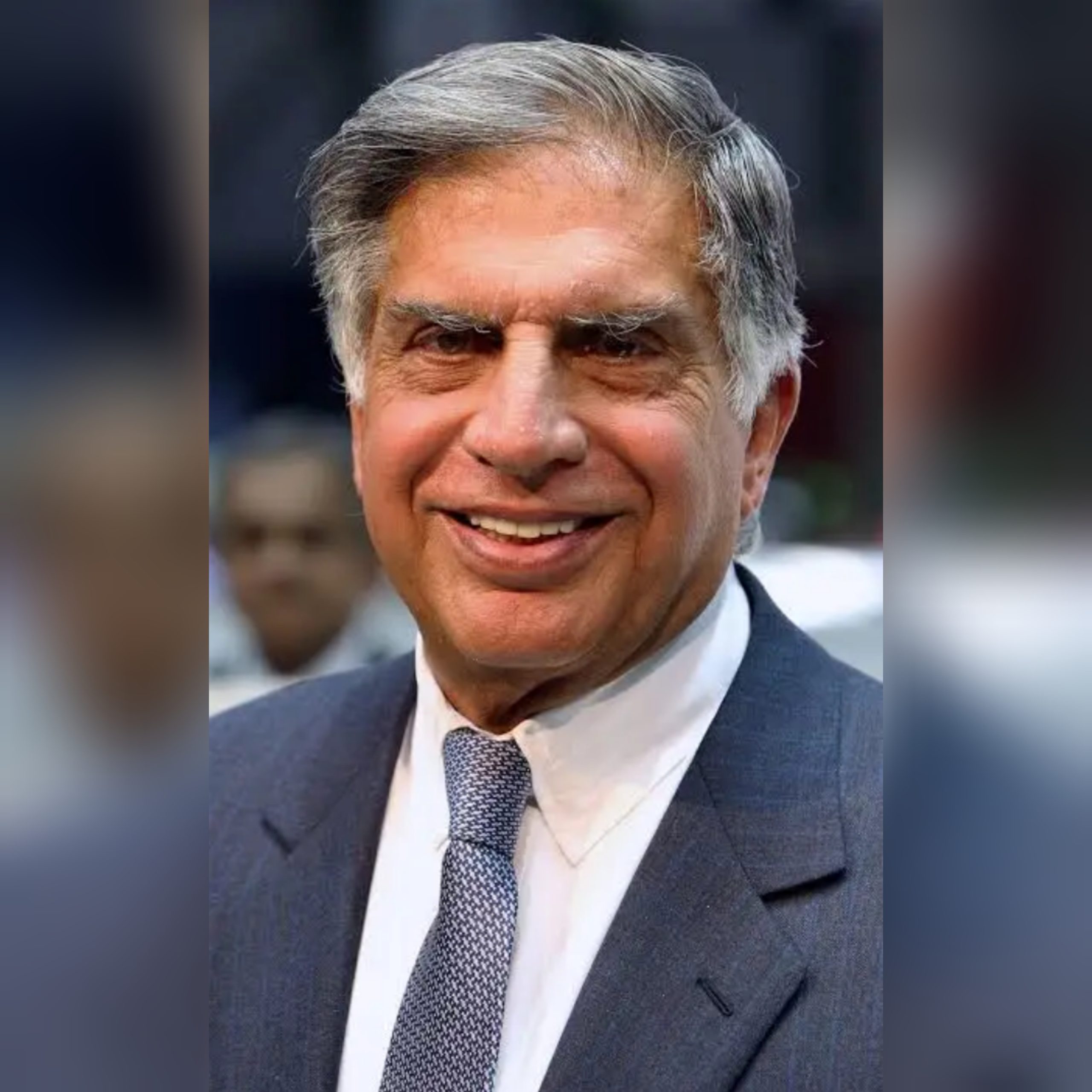
Ratan Tata Biography
Ratan Naval Tata was an Indian industrialist and philanthropist whose leadership transformed the Tata Group into a global enterprise while upholding a long tradition of ethical business and social responsibility. Born in Mumbai and raised in a prominent Parsi family, he guided one of India’s most respected conglomerates through decades of economic change and international expansion.
His life reflected a rare combination of vision, restraint, and quiet determination. From early years shaped by family challenges to a career marked by major acquisitions and a deep commitment to philanthropy, Ratan Tata left a lasting imprint on Indian industry and society. He passed away in Mumbai on 9 October 2024 at the age of 86.
Ratan Tata Early Life
Ratan Naval Tata was born on 28 December 1937 in Bombay, then part of British India and now known as Mumbai in the state of Maharashtra. He belonged to a Parsi Zoroastrian family with deep roots in India’s industrial history. His father, Naval Tata, had been adopted into the Tata family, while his mother, Soonoo Tata (also referred to as Sooni Commissariat), was related to the founder of the Tata Group. Ratan had a younger brother, Jimmy Tata, and later a half-brother, Noel Tata, from his father’s second marriage.
When Ratan was around ten years old, his parents separated. He and his brother were raised by their paternal grandmother, Lady Navajbai Tata, widow of Ratanji Tata. She provided a stable and disciplined home in Tata Palace, a grand residence in downtown Bombay. Navajbai instilled values of integrity, simplicity, and responsibility that stayed with him throughout his life. The family environment combined privilege with a strong sense of duty, shaped by the Parsi community’s emphasis on education, ethics, and public service.
Ratan attended several schools in Bombay, including Campion School and Cathedral and John Connon School. He also spent time at Bishop Cotton School in Shimla. For the final years of his secondary education, he moved to the United States and graduated from Riverdale Country School in New York City in 1955. These experiences exposed him early to both Indian and Western educational environments.
He then enrolled at Cornell University in Ithaca, New York, where he studied architecture and structural engineering. He earned a bachelor’s degree in architecture in 1962. During his time in America, he developed a lasting appreciation for design, independence, and a broader worldview. After graduation, he briefly worked with an architectural firm in Los Angeles. Family circumstances, including his grandmother’s health, drew him back to India. He also completed the Advanced Management Program at Harvard Business School in 1975, which strengthened his understanding of business strategy and leadership.
The city of Mumbai and the state of Maharashtra formed the core of his personal and professional world. The Tata family’s historical origins traced further back to Navsari in Gujarat, where earlier generations of the Parsi community had settled after migrating from Persia centuries earlier. The Parsis, followers of Zoroastrianism, established themselves as a close-knit community known for enterprise and philanthropy. By the time of Ratan’s birth, the family had long been based in Bombay, and the city remained central to his identity.
Ratan Tata Family Background and State of Origin
The Tata family originated among the Parsi community that settled in western India. Ancestral ties connected them to Navsari in present-day Gujarat, a town that served for generations as a centre of Parsi priestly and community life. Jamsetji Nusserwanji Tata, the founder of the Tata Group, was born in Navsari in 1839. His enterprise later shifted the family’s focus to Bombay, where the group’s headquarters and major institutions took root.
Ratan Tata’s immediate family reflected both continuity and complexity within this lineage. His father Naval Tata carried the family name through adoption by Lady Navajbai Tata after the death of her husband. This arrangement preserved the family line while bringing Naval into the core of the Tata business and philanthropic world. Ratan grew up aware of the weight of this heritage. The family maintained strong links to Mumbai’s social and commercial life, and the values of trusteeship, the idea that wealth should serve society, remained a guiding principle across generations.
Maharashtra, and specifically Mumbai, provided the primary setting for his life. The city’s cosmopolitan character, its role as a commercial hub, and its diverse communities shaped the environment in which he lived and worked. The Parsi community’s contributions to education, industry, and civic institutions in Mumbai formed an important part of the backdrop to his upbringing.
Ratan Tata Career
Ratan Tata joined the Tata Group in 1962. He began at the shop floor level, spending time at the Tata Steel plant in Jamshedpur and later at Tata Engineering and Locomotive Company, which later became Tata Motors. These early assignments gave him direct experience of manufacturing operations and the practical challenges of industrial work.
Early Roles and Management Experience
In the following years he moved through various positions across the group. In 1971 he was appointed director in charge of the National Radio and Electronics Company, known as NELCO. The company faced difficulties at the time, and his efforts focused on stabilising and improving its performance. In 1981 he became chairman of Tata Industries, where he worked on developing new businesses and strategic thinking within the group.
Leadership of Tata Sons
In 1991 Ratan Tata succeeded J.R.D. Tata as chairman of Tata Sons, the holding company of the Tata Group. The timing coincided with India’s economic liberalisation. Under his leadership the group pursued a clearer structure, greater professionalisation, and a more international outlook. He worked to reduce the influence of long-standing company heads who had operated with considerable autonomy and to bring greater coherence to the group’s many businesses.
Global Expansion and Major Acquisitions
Ratan Tata directed a series of significant international acquisitions. In 2000 Tata Tea acquired the British tea company Tetley. In 2004 Tata Motors purchased the truck manufacturing operations of Daewoo in South Korea. In 2007 Tata Steel acquired the Anglo-Dutch steelmaker Corus in a major deal that expanded the group’s global steel presence. In 2008 Tata Motors bought the British luxury brands Jaguar and Land Rover from Ford. These moves shifted a substantial portion of the group’s revenues toward international operations and established Tata as a more global player.
Product Innovation and Domestic Initiatives
Within India, Ratan Tata oversaw the development and launch of the Tata Indica, one of the country’s early indigenous passenger cars, and later the Tata Nano. The Nano was conceived as an affordable car aimed at making personal mobility accessible to a wider section of the population. Although the project faced production and market challenges, it reflected his interest in addressing everyday needs through industrial capability.
He stepped down as chairman of Tata Sons in December 2012 upon reaching the group’s retirement age, becoming chairman emeritus. In late 2016 he briefly returned as interim chairman following the removal of Cyrus Mistry, before Natarajan Chandrasekaran was appointed in 2017. After formal retirement he remained involved with the Tata Trusts and continued to support new ventures through personal investments in startups.
Ratan Tata Philanthropy and Social Contributions
Philanthropy formed a central part of Ratan Tata’s public life. The Tata Trusts, which hold a majority stake in Tata Sons, channel a significant share of the group’s dividends into social causes. Under his influence the Trusts focused on healthcare, education, rural development, livelihoods, nutrition, and water.
Cancer care received particular attention. The Tata Memorial Centre in Mumbai and later initiatives such as the Tata Medical Center in Kolkata expanded access to treatment and research. Efforts continued to build networks of cancer care facilities across several states. Education received support through scholarships, institutional grants, and partnerships with universities in India and abroad. Cornell University, Harvard Business School, and other institutions benefited from endowments linked to the Tata name.
During the COVID-19 pandemic, Tata Sons and the Trusts pledged substantial resources for medical supplies, testing, and healthcare infrastructure. Ratan Tata’s approach emphasised sustainable and community-oriented work rather than one-time charity. He also supported animal welfare causes, consistent with his personal attachment to dogs and concern for strays.
Ratan Tata Awards
Ratan Tata received numerous national and international honours. The Government of India awarded him the Padma Bhushan in 2000 and the Padma Vibhushan in 2008. These are among the country’s highest civilian distinctions. The state of Maharashtra conferred the Maharashtra Bhushan in 2006, and Assam awarded the Assam Baibhav in 2021 in recognition of contributions to cancer care.
International recognition included the Carnegie Medal of Philanthropy in 2007. He received honorary knighthoods from the United Kingdom: Knight Commander of the Order of the British Empire in 2009 and Knight Grand Cross in 2014. France awarded him the Commander of the Legion of Honour in 2016. In 2023 he was made an Honorary Officer of the Order of Australia. He also received multiple honorary doctorates from universities in India, the United States, the United Kingdom, and elsewhere, along with various leadership and lifetime achievement awards from business and academic organisations.
Ratan Tata Personal Life
Ratan Tata never married and had no children. He spoke of having come close to marriage on more than one occasion, including a relationship during his time in the United States, but circumstances and personal priorities led him to remain single. He often noted that the demands of his role in the Tata Group shaped the course of his private life.
He maintained a relatively private lifestyle despite his public position. Interests outside business included cars, flying, and animals. He held a pilot’s licence and flew various aircraft, including jets. In later years he experienced the thrill of flying a fighter jet at an air show. He collected and drove a range of cars, taking particular interest in both performance vehicles and Tata models. Design and architecture remained lifelong interests stemming from his university studies.
His affection for dogs was well known. He kept German Shepherds and other dogs as companions and ensured that stray dogs found shelter and care around the Tata Group headquarters in Mumbai. He sometimes prioritised the welfare of his pets over public engagements. Music, particularly the piano, attracted his interest in later years, though he pursued it privately.
He lived simply relative to the scale of the group he led. His manner was often described as reserved, courteous, and attentive to detail. Colleagues and those who met him frequently noted his humility and preference for substance over display.
Ratan Tata Leadership Style and Business Philosophy
Ratan Tata’s approach to leadership combined long-term thinking with a strong sense of institutional responsibility. He believed that business should serve a broader purpose beyond profit. The Tata tradition of trusteeship, the idea that companies hold resources in trust for society, remained central to his decisions.
He favoured professional management and sought to modernise governance within the group. At the same time he retained a personal interest in product design and customer needs, visible in projects such as the Indica and Nano. International expansion was pursued with an awareness of both opportunity and risk. Some acquisitions, particularly Corus, faced later challenges, yet they reflected a deliberate strategy to build scale and global capability.
His style was not flamboyant. He preferred careful deliberation and often listened more than he spoke in public settings. Those who worked with him described a leader who valued integrity, loyalty, and quiet determination.
Ratan Tata Later Years and Passing
After retiring as chairman, Ratan Tata continued to influence the group through his role with the Tata Trusts and as chairman emeritus. He invested personally in startups across technology, consumer, and other sectors, supporting younger entrepreneurs. He remained active in public discussion on business ethics, innovation, and social responsibility.
In his final years he faced age-related health issues. He was admitted to Breach Candy Hospital in Mumbai and passed away on 9 October 2024. His funeral was conducted with state honours. Tributes from across India and the world recognised both his business achievements and his personal qualities of dignity and generosity. Provisions in his will reflected continued care for those close to him, including staff and his dogs, alongside philanthropic commitments.
Conclusion
Ratan Naval Tata’s life spanned a transformative period in India’s economic history. From a childhood shaped by family change and strong maternal guidance to leadership of a vast industrial group, he carried forward a tradition of enterprise guided by ethical purpose. His tenure at the Tata Group expanded its global reach while reinforcing its reputation for trust. Through the Tata Trusts he directed resources toward healthcare, education, and rural development on a significant scale. Awards and public recognition acknowledged both commercial success and social contribution. His personal life, marked by privacy, interests in design and aviation, and deep affection for animals, revealed a man of quiet conviction. The institutions he helped shape and the example of responsible leadership he set continue to influence Indian business and society.
FAQs
Who was Ratan Tata?
Ratan Naval Tata was an Indian industrialist and philanthropist who served as chairman of the Tata Group and Tata Sons from 1991 to 2012, with a brief interim return in 2016–2017. He expanded the group internationally and remained closely associated with its philanthropic trusts.
When and where was Ratan Tata born?
Ratan Tata was born on 28 December 1937 in Bombay, now Mumbai, in the state of Maharashtra, India.
What was Ratan Tata’s educational background?
He completed secondary education in India and at Riverdale Country School in New York, earned a bachelor’s degree in architecture from Cornell University, and later completed the Advanced Management Program at Harvard Business School.
Did Ratan Tata marry?
No. Ratan Tata remained unmarried throughout his life and had no children.
What were some of Ratan Tata’s major business achievements?
Under his leadership the Tata Group acquired Tetley Tea, Corus Steel, and Jaguar Land Rover, among other companies. He also oversaw the development of the Tata Indica and the Tata Nano.
What awards did Ratan Tata receive?
He received the Padma Bhushan in 2000 and the Padma Vibhushan in 2008 from the Government of India, along with numerous international honours including British knighthoods, the Carnegie Medal of Philanthropy, and various honorary doctorates.
When did Ratan Tata pass away?
Ratan Tata died on 9 October 2024 in Mumbai at the age of 86.
What was Ratan Tata’s connection to philanthropy?
He played a leading role in the Tata Trusts, which support healthcare, education, rural development, and other social causes using dividends from Tata Sons. Cancer care and educational institutions received particular attention during his involvement.