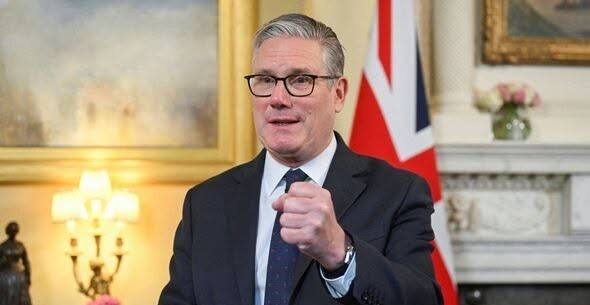
Keir Starmer Biography
Sir Keir Rodney Starmer is a British politician and former barrister who has shaped modern UK public life through his work in law and government. Born in London and raised in Surrey, he rose from a working class family to become a leading human rights lawyer, head of the Crown Prosecution Service, Member of Parliament, leader of the Labour Party, and Prime Minister of the United Kingdom from July 2024 to July 2026.
His path reflects a steady commitment to public service, fairness in the justice system, and practical politics. This biography covers his full name, origins, education, legal achievements, political rise, family life, and the recognition he has received, drawing on verified public records and reliable accounts to provide a clear and complete picture of his life and work.
Keir Starmer Early Life
Keir Rodney Starmer was born on 2 September 1962 in Southwark, south east London, England. He is British by nationality. His parents were Rodney Starmer, a skilled toolmaker who worked in a factory, and Josephine Starmer (née Baker), a nurse who worked for the National Health Service. He was the second of four children. His older sister Anna was born in 1961, and twins Katy and Nick arrived in 1964.
The family soon moved to a pebble dashed semi detached house in Hurst Green near Oxted in Surrey. This provided stability during years when money was often tight. Josephine had been diagnosed as a child with Still’s disease, a rare form of inflammatory arthritis that caused severe joint damage. She underwent multiple hip and knee replacements and later used a wheelchair. The condition shaped family life. Rodney often cared for her at home, and the children grew up watching their mother face repeated hospital stays. The NHS became central to the family’s experience, both as Josephine’s workplace and as her source of care.
Rodney and Josephine supported the Labour Party. They reportedly named their son after Keir Hardie, the first parliamentary leader of the Labour Party, though Starmer has said they never fully confirmed this. The household valued hard work and education. Holidays were simple, often in the Lake District, with the children and family dogs sharing limited space in the family car.
Starmer attended primary school in the nearby village of Merle Common. He passed the eleven plus examination and entered Reigate Grammar School. At the time it was a selective state school. It later became independent and fee paying, but existing pupils including Starmer continued without fees, supported by local arrangements and later a bursary. His siblings nicknamed him “superboy” because he excelled in academic work, music, and sport. He played the flute, piano, and violin, and shared music lessons with a classmate who later became the musician Norman Cook, known as Fatboy Slim. He also played football regularly and remains a lifelong Arsenal supporter.
As a teenager he joined the Labour Party Young Socialists at the age of sixteen. After school he took a gap year, working at an outdoor centre for disabled children in Cornwall and helping in his father’s workshop. He then became the first member of his family to attend university.
Keir Starmer Education and Early Influences
Starmer studied law at the University of Leeds and graduated in 1985 with a first class Bachelor of Laws degree. He continued at St Edmund Hall, University of Oxford, where he completed a postgraduate Bachelor of Civil Law degree in 1986. During his student years he took part in political activity, including support for miners’ families during the 1984 to 1985 strike. Between 1986 and 1987 he contributed to the editorial collective of the left wing magazine Socialist Alternatives.
These years strengthened his interest in social justice and the practical use of law to protect individual rights. He has described choosing law partly to please his parents while also seeing it as a route to meaningful public contribution.
Keir Starmer Career
Starmer’s professional life falls into two clear phases: a long and distinguished legal career followed by a later entry into elected politics that led to the highest office in the United Kingdom.
Legal Practice and Human Rights Work
He was called to the bar at the Middle Temple in 1987. He began as a barrister focusing on criminal defence and human rights. Early in his career he served as a legal officer for the civil liberties organisation Liberty. In 1990 he helped found Doughty Street Chambers, a progressive set of chambers specialising in human rights and public law. He later became joint head of the chambers.
His cases included high profile work against powerful interests. He advised the defendants in the long running McLibel trial, in which environmental campaigners faced a defamation action brought by McDonald’s. He also travelled to several Caribbean countries and other Commonwealth jurisdictions to represent people facing the death penalty, arguing against capital punishment on human rights grounds. After the 1998 Good Friday Agreement he served as a human rights adviser to the Northern Ireland Policing Board, helping to build confidence in policing among communities that had lived through decades of conflict.
In 2002 he was appointed Queen’s Counsel, recognising his standing in the profession. His reputation for careful preparation and principled advocacy made him a natural choice when the government sought a new Director of Public Prosecutions.
Director of Public Prosecutions
From 2008 to 2013 Starmer headed the Crown Prosecution Service of England and Wales. He led an organisation of several thousand staff responsible for hundreds of thousands of prosecutions each year. One practical achievement he has highlighted was the move from a paper based system to a digital one, which reduced the number of cases lost because of missing files. He oversaw major investigations, including the eventual successful prosecution of the killers of Stephen Lawrence. His tenure emphasised clearer charging decisions and greater attention to the needs of victims.
Entry into Parliament and Shadow Roles
After leaving the Crown Prosecution Service, Starmer decided to enter politics. In December 2014 he was selected as the Labour candidate for Holborn and St Pancras in London, a seat previously held by Frank Dobson. He won the seat at the general election on 7 May 2015 and has represented the constituency ever since.
In the early years of Jeremy Corbyn’s leadership he served briefly as shadow immigration minister. After the 2016 Brexit referendum he resigned from the front bench along with many colleagues but later returned as shadow secretary of state for exiting the European Union. In that role he argued for a close future relationship with the European Union and supported the possibility of a second referendum.
Leadership of the Labour Party
Following Labour’s heavy defeat in the 2019 general election, Corbyn announced he would stand down. Starmer entered the leadership contest and was elected leader on 4 April 2020 with 56.2 per cent of the vote in the first round. He became Leader of the Opposition during the early months of the Covid 19 pandemic.
As leader he worked to restore the party’s electoral credibility. He moved Labour toward the political centre on economic and cultural issues while retaining a focus on public services and workers’ rights. Under his leadership the party made gains in local elections in 2023 and 2024. Membership numbers fell from their Corbyn era peak, yet the organisation became more disciplined and focused on winning power.
Prime Minister of the United Kingdom
At the general election on 4 July 2024 Labour won a landslide victory, securing 411 seats and ending fourteen years of Conservative government. Starmer was appointed Prime Minister by King Charles III on 5 July 2024. He became the first Labour prime minister since Gordon Brown and the first to win a general election since Tony Blair.
His government introduced legislation on employment rights, renters’ protections, rail ownership, and clean energy. It established a National Wealth Fund and increased capital investment. Waiting lists for NHS treatment in England fell significantly during his time in office. On foreign policy he supported Ukraine, worked with European partners on security, and managed relations with the United States and China. In September 2025 the government announced formal recognition of a Palestinian state.
Challenges included public sector pay disputes, migration pressures, and internal party disagreements over welfare policy. After local election setbacks and growing pressure from within the Labour Party, Starmer tendered his resignation to the King on 20 July 2026. He was succeeded as Prime Minister and party leader by Andy Burnham. Starmer remains the Member of Parliament for Holborn and St Pancras.
Keir Starmer Awards
In the 2014 New Year Honours Starmer was appointed Knight Commander of the Order of the Bath for services to law and criminal justice. He received the knighthood from the then Prince of Wales. The honour recognised his leadership of the Crown Prosecution Service and earlier contributions to human rights law.
In July 2026, shortly before leaving office, he became the first British prime minister to receive the Légion d’honneur from a French president. President Emmanuel Macron presented the award in recognition of Starmer’s role in building a coalition of countries supporting Ukraine and strengthening European security cooperation.
Keir Starmer State of Origin and Roots in Surrey
Although born in London, Starmer’s formative years were spent in Surrey. The family home in Hurst Green near Oxted sat in the Surrey countryside on the edge of the London commuter belt. Oxted and the surrounding villages of Woldingham and Merle Common formed the landscape of his childhood. His parents had grown up in the same part of Surrey. Rodney had attended Purley Grammar School and completed an apprenticeship in toolmaking followed by national service. Josephine trained as a nurse after grammar school in Whyteleafe.
The area combined rural and suburban character. Starmer has often spoken of the pebble dashed house as a place of stability despite financial pressures and his mother’s illness. The local primary school, the grammar school in Reigate, and the everyday life of a skilled working class family in Surrey shaped his understanding of community, effort, and the value of public services. These roots remained important to him throughout his career. Even after moving to London for university and professional life, he continued to refer to the Surrey upbringing as central to his identity.
Keir Starmer Personal Life
Starmer married Victoria Alexander in 2007. They met in the early 2000s while working on the same legal case. Victoria trained as a solicitor, studied law and sociology at Cardiff University, and served as president of the students’ union there. She later moved into occupational health work for the NHS. The couple have a son and a daughter. They raised the children as vegetarians until the age of ten, after which the children could choose whether to eat meat. Starmer himself is a pescatarian.
Before moving to Downing Street the family lived in a townhouse in Kentish Town, north west London. Starmer has been careful to protect his children’s privacy and has rarely spoken publicly about them in detail. He is an atheist and has taken a solemn affirmation rather than a religious oath when required in official settings. Football remains a constant interest. He still plays regularly with friends and holds a season ticket at Arsenal’s Emirates Stadium, often attending matches with his children.
His parents both died in the years after he entered Parliament. Josephine died in 2015 and Rodney in 2018. Starmer has spoken of the complicated relationship with his father, describing him as a difficult man who was proud of his son’s achievements even if he did not always show it openly.
Conclusion
Keir Starmer’s life traces a clear line from a modest home in Surrey through academic success, a career defending rights and prosecuting crime, and finally to the leadership of his party and the country. His time as Prime Minister lasted just over two years, yet it marked the return of Labour to power after a long period in opposition and produced measurable progress in health service waiting times and other areas of policy. As a Member of Parliament he continues to represent the people of Holborn and St Pancras. The combination of legal expertise, political discipline, and personal experience of both hardship and public service has defined his contribution to British public life.
FAQs
What is Keir Starmer’s full name and date of birth?
His full name is Sir Keir Rodney Starmer. He was born on 2 September 1962.
Where was Keir Starmer born and where did he grow up?
He was born in Southwark, London, and grew up in Hurst Green near Oxted in Surrey.
Who are Keir Starmer’s parents?
His father was Rodney Starmer, a toolmaker. His mother was Josephine Starmer, a nurse who lived with Still’s disease for most of her life.
What is Keir Starmer’s educational background?
He earned a first class law degree from the University of Leeds in 1985 and a Bachelor of Civil Law from St Edmund Hall, Oxford, in 1986.
When did Keir Starmer become a barrister and what was his specialism?
He was called to the bar in 1987. He specialised in criminal defence and human rights law.
What senior legal role did Keir Starmer hold?
He served as Director of Public Prosecutions and head of the Crown Prosecution Service from 2008 to 2013.
When was Keir Starmer elected to Parliament?
He was first elected Member of Parliament for Holborn and St Pancras on 7 May 2015.
When did Keir Starmer become leader of the Labour Party?
He was elected leader on 4 April 2020.
When did Keir Starmer serve as Prime Minister?
He served as Prime Minister from 5 July 2024 to 20 July 2026.
Is Keir Starmer married and does he have children?
He married Victoria Alexander in 2007. They have a son and a daughter.
What honours has Keir Starmer received?
He was appointed Knight Commander of the Order of the Bath in 2014 and received the French Légion d’honneur in 2026.