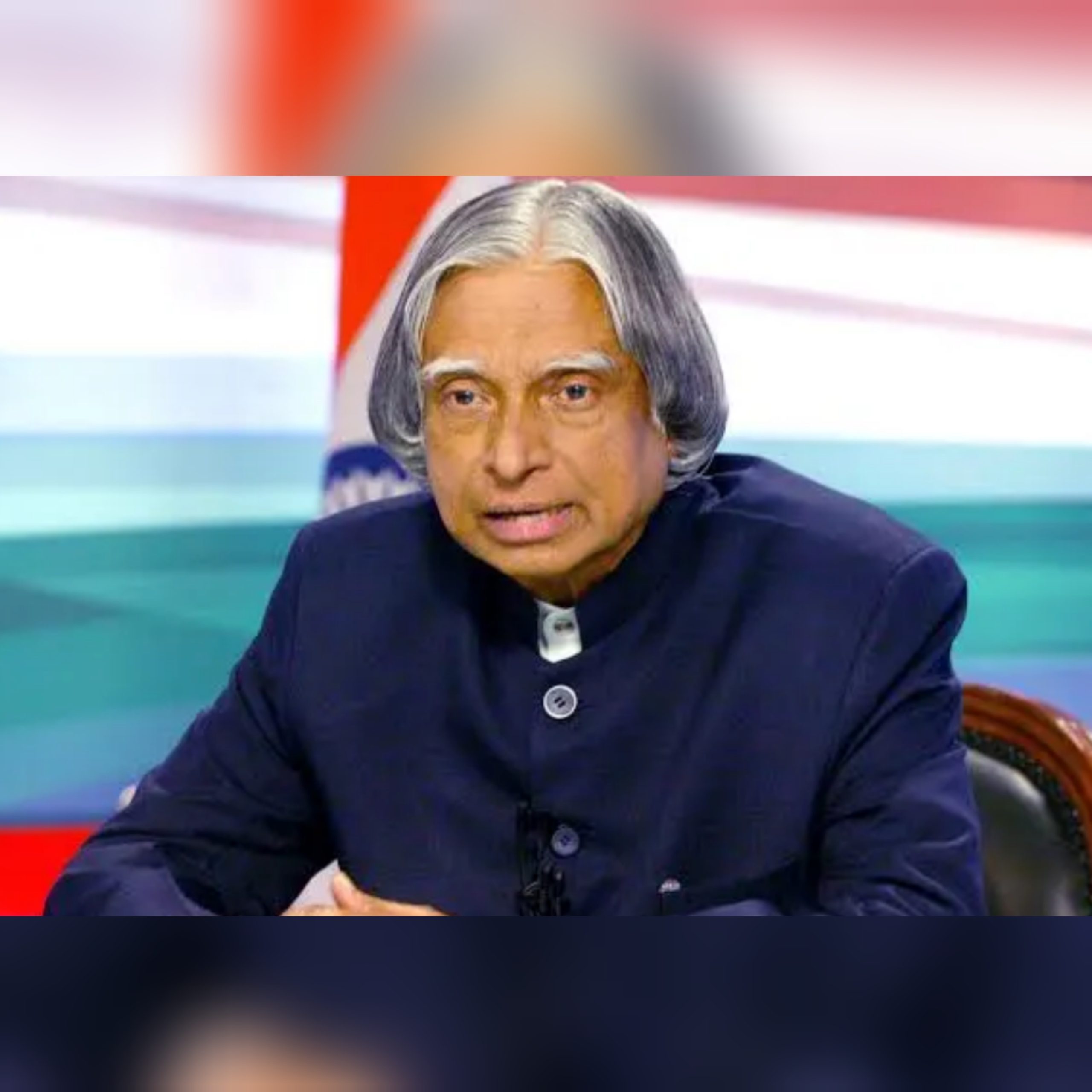
Apj Abdul Kalam Biography
Avul Pakir Jainulabdeen Abdul Kalam, widely known as A.P.J. Abdul Kalam, was born in Rameswaram in the Indian state of Tamil Nadu and remained an Indian national throughout his life. He rose from modest beginnings on a coastal island to become one of the most respected figures in modern Indian history as a pioneering aerospace scientist, key contributor to the nation’s missile and space programmes, and the eleventh President of India.
His life story continues to inspire generations because it demonstrates how determination, education, and service to the nation can overcome limited material resources. Through decades of work in research organisations and later in public office, he helped strengthen India’s technological capabilities while consistently encouraging young people to dream big and work hard for the country’s progress.
APJ Abdul Kalam Early Life
Avul Pakir Jainulabdeen Abdul Kalam was born on 15 October 1931 in the town of Rameswaram on Pamban Island, then part of the Madras Presidency under British rule and now in Tamil Nadu. He belonged to a Tamil Muslim family of modest means. His father, Jainulabdeen, owned boats that ferried Hindu pilgrims between Rameswaram and the nearby settlement of Dhanushkodi and also served as an imam at the local mosque. His mother, Ashiamma, managed the household and was known for her generosity in feeding not only family members but also many visitors and neighbours.
The family lived in an ancestral house on Mosque Street built in the middle of the nineteenth century. Although the household provided the necessities of food, clothing, and medicine, luxuries were deliberately avoided. Kalam was the youngest of five siblings, with three older brothers and one sister. The family’s earlier generations had known greater prosperity as traders and landowners, but by the time of his childhood the circumstances had become simpler.
Rameswaram itself is a significant place in Tamil Nadu. Located on Pamban Island off the southeastern coast, the town is famous for the ancient Ramanathaswamy Temple, one of the most important pilgrimage centres in Hindu tradition. The island sits near the chain of limestone shoals known as Adam’s Bridge or Rama Setu that stretches towards Sri Lanka. The surrounding waters of the Gulf of Mannar and Palk Strait shaped daily life, with fishing and boat services forming an important part of the local economy. The close interaction between communities of different faiths in this temple town left a lasting impression on the young Kalam. His father regularly discussed local matters with the high priest of the Ramanathaswamy Temple and a Christian priest, creating an atmosphere of mutual respect that Kalam later recalled as formative.
As a boy Kalam helped support the family by distributing newspapers in the early morning hours before school. He developed an early interest in flight by observing birds and by examining models of aeroplanes sold in a family-related shop near the temple. These experiences, combined with the disciplined and values-driven atmosphere at home, shaped his character. He later wrote that he inherited honesty and self-discipline from his father and a deep faith in goodness and kindness from his mother.
APJ Abdul Kalam Education and Formative Years
Kalam completed his early schooling in Rameswaram before moving to Schwartz Higher Secondary School in Ramanathapuram. There he gained confidence and a determination to pursue further studies. He then enrolled at St. Joseph’s College in Tiruchirappalli, where he graduated with a degree in physics in 1954. Although he was not always the highest-ranking student in examinations, he developed a practical approach to learning and a strong interest in science and mathematics.
His childhood fascination with flight led him to seek specialised training in aeronautics. In 1955 he joined the Madras Institute of Technology to study aeronautical engineering. Completing this programme prepared him for a career in aerospace and defence research. He trained briefly at Hindustan Aeronautics Limited in Bangalore. An attempt to join the Indian Air Force as a pilot ended just short of selection when he ranked ninth among candidates for eight available places. This setback redirected him toward research and development work rather than flying itself.
Throughout these years Kalam remained closely connected to his roots in Tamil Nadu. The coastal environment of Rameswaram, the disciplined routines of his family, and the encouragement of mentors such as his cousin Samsuddin and teacher figures helped sustain his focus. He later credited the unschooled wisdom of relatives and the open-minded atmosphere of his hometown with nurturing his creativity and sense of purpose.
APJ Abdul Kalam Career
Kalam began his professional life in 1958 when he joined the Defence Research and Development Organisation as a senior scientific assistant. His early assignments included work on a hovercraft project. In 1969 he moved to the Indian Space Research Organisation, where he took on increasing responsibility in launch vehicle development.
APJ Abdul Kalam Work with Satellite Launch Vehicles
At the Indian Space Research Organisation Kalam served as project director for the Satellite Launch Vehicle III programme. This effort aimed to create India’s first indigenously designed and produced satellite launch vehicle. After an earlier unsuccessful attempt, the vehicle successfully placed the Rohini satellite into near-Earth orbit in July 1980. This achievement marked India’s entry into the group of nations capable of launching their own satellites and established Kalam as a key figure in the country’s space programme. He continued to contribute to further developments in launch vehicle technology during his years with the organisation.
APJ Abdul Kalam Leadership in Missile Development
In 1982 Kalam returned to the Defence Research and Development Organisation and took charge of the Integrated Guided Missile Development Programme. Under this initiative India developed several missile systems, including the surface-to-surface Prithvi and the intermediate-range Agni. The Agni programme incorporated technologies refined during the satellite launch vehicle work. Successful tests in the late 1980s and subsequent years earned Kalam the popular description of Missile Man of India. His leadership emphasised indigenous capability, coordination among multiple research institutions, and the practical application of advanced engineering under resource constraints.
APJ Abdul Kalam Role as Scientific Adviser
From 1992 to 1999 Kalam served as Scientific Adviser to the Defence Minister and Secretary of the Department of Defence Research and Development. In this capacity he guided the weaponisation of missile systems and supported broader defence technology efforts. Between November 1999 and November 2001 he held the position of Principal Scientific Adviser to the Government of India with the rank of Cabinet Minister. During this period he helped shape policies linking science and technology to national development goals.
APJ Abdul Kalam Contribution to Nuclear Tests
Kalam played a central organisational and technical role in the Pokhran-II series of nuclear tests conducted in May 1998 in the Rajasthan desert. Five devices were detonated under his coordination as a senior scientific figure. The successful tests confirmed India’s nuclear capabilities and elevated his public profile, though they also drew international attention and debate. His involvement reflected a consistent focus on strengthening the country’s strategic autonomy through science and engineering.
APJ Abdul Kalam Vision for National Development
Beyond specific projects, Kalam articulated a broader framework for India’s progress. In 1998 he presented Technology Vision 2020, a plan outlining pathways for the country to transition from a developing to a developed nation within two decades. The vision emphasised technology-driven growth in agriculture, healthcare, education, and infrastructure. He argued that scientific capability, when combined with skilled human resources and inclusive policies, could address poverty and create sustainable prosperity. This perspective guided much of his later public engagement and writing.
APJ Abdul Kalam Presidency
In 2002 the National Democratic Alliance nominated Kalam for the office of President of India. His scientific achievements, personal integrity, and broad popular appeal led the main opposition party, the Indian National Congress, to support the nomination as well. He won the election comfortably and was sworn in as the eleventh President on 25 July 2002. He served a full five-year term until 25 July 2007.
As President he occupied a largely ceremonial constitutional role yet used the position to connect with citizens, especially students and young people. He travelled extensively, addressed gatherings across the country, and continued to promote the goals of Technology Vision 2020. His approachable manner and focus on education and innovation earned him the affectionate title of People’s President. He left office at the end of his term and was succeeded by Pratibha Patil.
APJ Abdul Kalam Books and Intellectual Contributions
Kalam authored or co-authored more than two dozen books that combined personal reflection, scientific insight, and national aspiration. His autobiography Wings of Fire, written with Arun Tiwari and published in 1999, recounts his journey from Rameswaram to the highest levels of scientific leadership. India 2020: A Vision for the New Millennium, co-authored with Y.S. Rajan and published in 1998, elaborates the development roadmap he advocated. Ignited Minds: Unleashing the Power Within India appeared in 2002 and focused on the potential of India’s youth. Other notable works include Turning Points, My Journey: Transforming Dreams into Actions, Target 3 Billion, and Transcendence: My Spiritual Experiences with Pramukh Swamiji. Many of these volumes have been translated into multiple Indian languages and continue to be widely read for their combination of practical advice and inspirational tone.
APJ Abdul Kalam Personal Life
Kalam never married and had no children. He maintained close ties with his siblings and extended family throughout his life, often providing quiet support. His personal lifestyle remained simple even after decades of high office. He owned few possessions beyond books, a few sets of clothes, a wristwatch, and his veena, which he played regularly. He worked long hours, practised discipline in daily routines, and found fulfilment in teaching and interacting with students.
After leaving the presidency he continued academic engagement as a professor and visiting faculty at institutions including Anna University and several campuses of the Indian Institute of Management. He served as the founding chancellor of the Indian Institute of Space Science and Technology in Thiruvananthapuram. His interactions with young people remained a central activity until the end of his life.
APJ Abdul Kalam Awards
The Government of India recognised Kalam’s contributions with the Padma Bhushan in 1981, the Padma Vibhushan in 1990, and the Bharat Ratna, the nation’s highest civilian honour, in 1997. He also received the Indira Gandhi Award for National Integration in 1997 and the Veer Savarkar Award in 1998. International recognition included the King Charles II Medal from the Royal Society in 2007, the Hoover Medal from the American Society of Mechanical Engineers in 2009, and the International von Kármán Wings Award from the California Institute of Technology in the same year. He was awarded honorary doctorates by numerous universities in India and abroad.
APJ Abdul Kalam Later Years and Passing
In his final years Kalam remained active in public speaking, writing, and mentoring. On 27 July 2015 he travelled to Shillong to deliver a lecture titled “Creating a Livable Planet Earth” at the Indian Institute of Management. While addressing students he suffered a cardiac arrest and was pronounced dead later that day at the age of 83. His body was brought to Rameswaram, where he was laid to rest with full state honours. A memorial complex was later established near his hometown to commemorate his life and work.
Conclusion
The life of Avul Pakir Jainulabdeen Abdul Kalam illustrates the power of education, perseverance, and service. From a childhood on the island of Rameswaram in Tamil Nadu he rose through scientific achievement to help build India’s space and missile capabilities, contribute to its strategic programmes, and serve as President. His writings and interactions with millions of students continue to encourage young people to pursue knowledge and contribute to national development. His example remains relevant for anyone seeking to understand how individual effort combined with institutional opportunity can shape both personal destiny and the progress of a nation.
FAQs
What is the full name of APJ Abdul Kalam?
His full name is Avul Pakir Jainulabdeen Abdul Kalam.
Where was APJ Abdul Kalam born?
He was born in Rameswaram on Pamban Island in what is now the state of Tamil Nadu, India.
When did APJ Abdul Kalam serve as President of India?
He served as the eleventh President from 25 July 2002 to 25 July 2007.
Why is APJ Abdul Kalam called the Missile Man of India?
He earned this description because of his leadership of the Integrated Guided Missile Development Programme that produced systems such as Agni and Prithvi.
What are some of the most well-known books written by APJ Abdul Kalam?
Among his widely read works are Wings of Fire, India 2020: A Vision for the New Millennium, and Ignited Minds.
Did APJ Abdul Kalam marry?
He remained a bachelor throughout his life and had no children.
What major civilian awards did APJ Abdul Kalam receive from the Government of India?
He received the Padma Bhushan in 1981, the Padma Vibhushan in 1990, and the Bharat Ratna in 1997.
How did APJ Abdul Kalam die?
He died of cardiac arrest on 27 July 2015 while delivering a lecture at the Indian Institute of Management in Shillong.