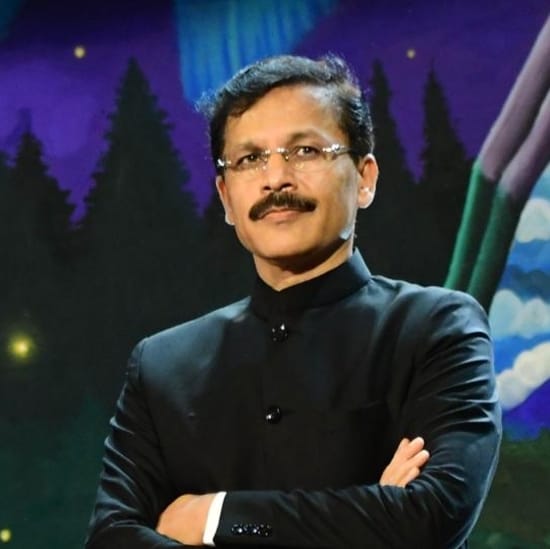
Tukaram Mundhe Biography
Tukaram Haribhau Mundhe, born on June 3, 1975, in Tadsonna village, Beed district, Maharashtra, is an Indian citizen and a senior officer of the Indian Administrative Service. Over the past two decades, he has become one of the most talked about civil servants in India, admired for his discipline, honesty, and willingness to act against wrongdoing regardless of political pressure.
His journey from a small farming family in drought prone Marathwada to some of Maharashtra’s most important administrative posts has inspired many young Indians who dream of joining the civil services. This article looks closely at his early life, education, career, achievements, and the personal values that have shaped his public service.
Tukaram Mundhe Early Life and Education
Tukaram Mundhe was born on June 3, 1975, into a farming family in Tadsonna, a small village in Beed district. Beed lies in the Marathwada region of Maharashtra, an area historically known for frequent droughts, water scarcity, and agricultural distress. His parents, Haribhau and Aasrabai Mundhe, depended entirely on farming for their livelihood, and the family often struggled financially. Like many rural households at the time, they also carried debt owed to local moneylenders, a burden that shaped young Tukaram’s understanding of the everyday hardships faced by ordinary farmers.
From around the age of eight, Tukaram began helping his family with farm work. He took part in tasks such as fencing fields, digging wells, and accompanying his parents to sell vegetables at the weekly village market. These early responsibilities taught him discipline and a strong work ethic that would later define his professional life. Despite the difficulties of rural life, his parents placed great importance on education and encouraged their children to study hard.
His elder brother, Ashok Mundhe, became the first person from their village to graduate and later joined the civil services himself, becoming an important early role model for Tukaram. Watching his brother’s success gave the young Tukaram a clear goal to work toward.
Tukaram Mundhe received his early education at a Zilla Parishad school in Beed, a government run rural school typical of the region. He then moved on to complete his graduation from the Government College of Arts and Science in Chhatrapati Sambhajinagar, known as Aurangabad at the time, earning a Bachelor of Arts degree in History in 1996. He went on to pursue a Master of Arts in Political Science from Dr. Babasaheb Ambedkar Marathwada University, further building the academic foundation that would support his future civil service career.
Preparing for competitive government examinations was not an easy path for Mundhe. He attempted the Maharashtra Public Service Commission examination multiple times, facing three unsuccessful attempts before finally clearing the MPSC in 2001. This period of setbacks tested his patience and determination, but he continued preparing rather than giving up. His persistence paid off when, a few years later, he sat for the Union Public Service Commission Civil Services Examination in 2004 and secured an impressive All India Rank of 20, a result that opened the door to the Indian Administrative Service.
Tukaram Mundhe’s State of Origin: Beed District, Maharashtra
Understanding Tukaram Mundhe’s public service style is difficult without understanding where he comes from. Beed district sits in the Marathwada region of central Maharashtra, an area that has long faced challenges around irrigation, water availability, and rural poverty. Farmers in this belt often depend heavily on the monsoon, and years of poor rainfall have historically led to crop failures, debt, and migration in search of work.
Growing up in Tadsonna, Mundhe witnessed firsthand how government welfare schemes sometimes failed to reach the people who needed them most. He has spoken about how these early experiences, watching promises made to farmers go unfulfilled, played a role in drawing him toward public administration. He wanted to be part of a system that could genuinely deliver for people like his own family rather than simply promise change on paper.
This background also explains his particular interest in water conservation and rural welfare throughout his career. His hands on understanding of what drought and scarcity mean for ordinary families gave him a perspective that many officers who grew up in cities may not have had. It is a big reason why his later work on water management as District Collector of Solapur resonated so strongly with local communities.
Mundhe belongs to a Vanjari farming family, a community traditionally associated with agriculture and trade in parts of Maharashtra. His rise from this modest rural background to one of the highest levels of state administration is often cited as proof that determination and education can overcome even the most difficult starting circumstances.
Tukaram Mundhe Career
Joining the Indian Administrative Service
After clearing the UPSC Civil Services Examination in 2004 with All India Rank 20, Tukaram Mundhe was allotted the Maharashtra cadre, his home state, allowing him to serve the very region he grew up in. He belongs to the 2005 batch of the IAS. Following his training period, he took charge as a Supernumerary Assistant Collector in Solapur on August 22, 2005, marking the formal start of a career that would soon become known for its uncompromising style.
Even in his very first posting, Mundhe signalled the kind of officer he intended to be. He took action to shut down an illegal bar linked to a local politician, an early sign that political connections would not shield anyone from action under his watch. This approach, treating every case on its legal and administrative merit rather than on who was involved, became the hallmark of his entire career.
District Collector of Solapur and Early Postings
One of the most defining periods in Mundhe’s early career was his tenure as District Collector of Solapur. Solapur, like much of the surrounding region, faces recurring water shortages, and Mundhe focused heavily on improving water management and irrigation planning. He also worked to bring greater transparency to local administration and took firm action against illegal sand mining, an activity that often causes environmental damage and is difficult to control because of the money involved.
His work in Solapur was widely recognised. For his contribution to water conservation and overall administrative performance, he received the Maharashtra government’s Best District Collector Award for 2015 and 2016. This recognition, along with his visible impact on water availability in a drought affected district, earned him the popular title “Waterman of Maharashtra,” a name that has stayed with him throughout his career.
He also served in other district level roles, including postings connected to Jalna, Nanded, and Washim, where he continued applying the same close, hands on style of administration. Across these early roles, colleagues and citizens alike began noticing his habit of conducting surprise inspections and engaging directly with the public rather than relying only on paperwork and reports from subordinates.
Municipal Commissioner of Nashik
Mundhe’s posting as Commissioner of the Nashik Municipal Corporation became one of the most widely reported chapters of his career. During this period, he pushed hard for stricter enforcement of civic rules, greater accountability among municipal staff, and improved use of public funds. His firm approach often put him at odds with local elected representatives who were used to a different way of working.
This friction eventually led to his transfer from Nashik, one of many such transfers he would face throughout his service. Speaking about the frequent moves, Mundhe once compared the situation to a child needing to be admitted to a new school every year, a comment that captured both the frustration and the calm acceptance with which he handled these disruptions.
Municipal Commissioner of Navi Mumbai
As Municipal Commissioner of Navi Mumbai, Mundhe again focused on how public money was being spent. He closely examined ongoing and proposed projects, questioning expenditure that did not appear to serve genuine civic needs, and redirected attention and resources toward practical infrastructure and public accessibility. His tenure here, much like in Nashik, drew both praise from residents who appreciated the renewed focus on basic services and criticism from those who felt his style was too rigid or confrontational.
During this period, multiple no confidence motions were filed against him by local elected bodies, reflecting the tension that often arose between his administrative decisions and the expectations of political stakeholders. Despite this pressure, Mundhe maintained the same working principles he had followed since his earliest days in Solapur.
Chief Executive Officer in Barshi and the Three Point Test
During his stint as Chief Executive Officer in Barshi, Mundhe launched a demolition drive targeting unauthorised structures built without proper approval. The action was met with strong resistance, including threats of self immolation from those affected and significant media attention. Rather than backing away under pressure, Mundhe held firm, relying on a simple framework he had developed for difficult decisions.
His three point checklist asked whether an action was legal, whether it was morally correct, and whether it served the public interest. If an action satisfied legality along with at least one of the other two conditions, he would proceed without hesitation. This straightforward test became the guiding principle behind many of his most controversial decisions throughout his career, giving his critics and supporters alike a clear window into how he made up his mind.
Other Administrative Roles
Beyond his district and municipal postings, Mundhe has held a wide range of other significant positions. He served as Director of the National Health Mission in Maharashtra and later as the state’s Health Commissioner, where he worked to improve accountability at government health facilities. This included surprise inspections of Primary Health Centres, the introduction of biometric attendance systems for medical staff, and action against doctors reported to be running private practices during official government hours.
He also served as Chairman and Managing Director of the Pune Mahanagar Parivahan Mahamandal Limited, the public transport body for Pune, as well as Commissioner of the Nagpur Municipal Corporation. In addition, he has held the position of Secretary across more than one state government department, most recently serving as Secretary of the Revenue and Disaster Management Department in Mumbai. In total, his career spans more than twenty five documented postings across over a dozen locations, an unusually high number even by the standards of the Indian civil services.
Commissioner of Maharashtra’s Food and Drug Administration
In 2026, Tukaram Mundhe took charge as Commissioner of Maharashtra’s Food and Drug Administration. Almost immediately, he launched one of the state’s largest ever enforcement drives against food adulteration, targeting issues such as synthetic milk production, poor hygiene standards, and businesses operating without proper licences under the Food Safety and Standards Authority of India norms.
The campaign uncovered several units allegedly involved in producing and distributing adulterated milk, along with widespread violations across the dairy supply chain, from producers and transporters to wholesalers and retailers. Mundhe made it clear that there would be no compromise when public health was at stake, a statement consistent with the approach he has followed throughout his career. This role has once again placed him at the centre of public attention in Maharashtra, reinforcing his long standing reputation as an officer unwilling to look away from wrongdoing.
Tukaram Mundhe’s Frequent Transfers
Perhaps no aspect of Tukaram Mundhe’s career has attracted as much public discussion as the sheer number of times he has been transferred. Over roughly two decades of service, reports place the number of his transfers at more than twenty, with some accounts citing as many as twenty three or twenty five moves. Administrative norms generally expect officers to serve a minimum tenure of around three years in a given post, yet Mundhe has often been moved after less than a year in a role.
Observers and commentators frequently compare him to Haryana’s Ashok Khemka, another officer known for facing repeated transfers as a result of taking firm administrative stances. Supporters view this pattern as clear evidence of Mundhe’s uncompromising integrity, arguing that his transfers are a direct consequence of decisions that upset powerful interests. Critics, on the other hand, have questioned whether such a confrontational style disrupts the continuity needed for long term governance and project execution.
Whatever the interpretation, the frequency of his transfers has made Tukaram Mundhe a distinctive figure in Indian bureaucracy, someone whose career path illustrates the tension that can exist between rule based administration and the political systems it operates within.
Tukaram Mundhe Awards and Recognition
Tukaram Mundhe’s contributions to public administration have earned him several honours over the years. He received the Maharashtra government’s Best District Collector Award for 2015 and 2016 in recognition of his work as Collector of Solapur, particularly for his achievements in water conservation and administrative transparency. His efforts in this area also earned him the informal but widely used title “Waterman of Maharashtra.”
During his tenure in Navi Mumbai, his civic initiatives received the SKOCH Order of Merit, an award given for outstanding contributions to governance and public service in India. Beyond these formal recognitions, Mundhe has earned a number of popular titles from the public and media over the years, including “People’s Officer,” “People’s Commissioner,” “Man on a Mission,” and “Singham of Maharashtra,” the last a reference to a fearless, no nonsense film character known for standing up against corruption. While these titles are not official awards, they reflect the strong public perception that has built up around his career.
Tukaram Mundhe Personal Life
Tukaram Mundhe is married to Archana Mundhe, and the couple have two children, a son named Agastya and a daughter named Ashana. Despite his high public profile, Mundhe has generally kept details of his family life private, choosing to let his professional record speak for itself rather than drawing attention to his personal circumstances.
His family background, rooted in a modest Vanjari farming household in Beed district, continues to shape his outlook. He has spoken about the values instilled in him by his parents, Haribhau and Aasrabai, particularly their emphasis on hard work and education despite financial hardship. His elder brother Ashok, who became the first graduate and civil servant from their village, remains an important influence and source of pride within the family.
Reports about Mundhe’s personal wealth or net worth have circulated online, but there is no reliable, officially verified figure available in the public domain. As with most government officers, his declared assets, liabilities, and salary under the applicable IAS pay scale offer a more accurate picture of his financial standing than unverified online estimates, which should be treated with caution.
Tukaram Mundhe’s Public Image and Legacy
Tukaram Mundhe’s career has not been free of controversy. His direct, sometimes confrontational style has led to friction with elected representatives in more than one posting, resulting in no confidence motions during his time in Navi Mumbai and Nashik. He has also faced legal complications, including a First Information Report filed against him related to lockdown restriction violations, as well as a harassment complaint lodged by a former officer. These episodes are part of the public record and form a balanced picture of a career that includes both significant achievement and genuine controversy.
At the same time, his supporters point to a consistent, decades long pattern of behaviour that has never wavered regardless of pressure. From his very first posting in Solapur to his current role at the Food and Drug Administration, Mundhe has applied the same basic principles: check whether an action is legal, whether it is ethically sound, and whether it serves the public. This consistency, more than any single achievement, is often cited as the reason his career continues to attract national attention.
His legacy, still being written, offers an important case study for anyone interested in Indian public administration. It raises real questions about how far individual integrity can go within a system that also depends on political cooperation, and about what it costs an officer, in terms of stability and career continuity, to consistently choose principle over convenience.
Conclusion
Tukaram Mundhe’s story is one of steady determination built on a foundation of hardship, education, and a clear sense of purpose. From a small farming family in drought affected Beed district to some of the most demanding administrative posts in Maharashtra, his path reflects what disciplined effort and firm principles can achieve within the Indian civil services. His record of over twenty postings and repeated transfers highlights both the challenges and the personal cost of choosing an uncompromising approach to public duty. Whether leading water conservation efforts in Solapur, enforcing civic discipline in Nashik and Navi Mumbai, or cracking down on food adulteration as FDA Commissioner, Mundhe has remained guided by the same simple test of legality, ethics, and public interest. His career continues to serve as a reference point for discussions on integrity, accountability, and the everyday realities of public service in India.
FAQs
Who is Tukaram Mundhe?
Tukaram Mundhe is an Indian Administrative Service officer of the 2005 batch, Maharashtra cadre, known for his strict, transparent, and uncompromising approach to public administration.
When and where was Tukaram Mundhe born?
He was born on June 3, 1975, in Tadsonna village in Beed district, Maharashtra.
What is Tukaram Mundhe’s educational background?
He completed his Bachelor of Arts in History from the Government College of Arts and Science in Chhatrapati Sambhajinagar in 1996 and later earned a Master of Arts in Political Science from Dr. Babasaheb Ambedkar Marathwada University.
Why is Tukaram Mundhe called the Waterman of Maharashtra?
He earned this title for his significant contribution to water conservation and irrigation management during his tenure as District Collector of Solapur, a drought prone district in Maharashtra.
How many times has Tukaram Mundhe been transferred?
Reports vary, but he has reportedly been transferred more than twenty times over roughly two decades of service, making him one of the most frequently transferred IAS officers in India.
What is Tukaram Mundhe’s current position?
As of 2026, Tukaram Mundhe serves as the Commissioner of Maharashtra’s Food and Drug Administration, where he leads a statewide enforcement drive against food adulteration.
What awards has Tukaram Mundhe received?
He received the Maharashtra government’s Best District Collector Award for 2015 and 2016, along with the SKOCH Order of Merit for his civic initiatives during his tenure in Navi Mumbai.
Is Tukaram Mundhe married?
Yes, he is married to Archana Mundhe, and the couple have two children, Agastya and Ashana.
Leave a Reply